Worm-Infested Mangoes Meant for Juice Production Seized in Gujarat: A Wake-Up Call for the Food Industry
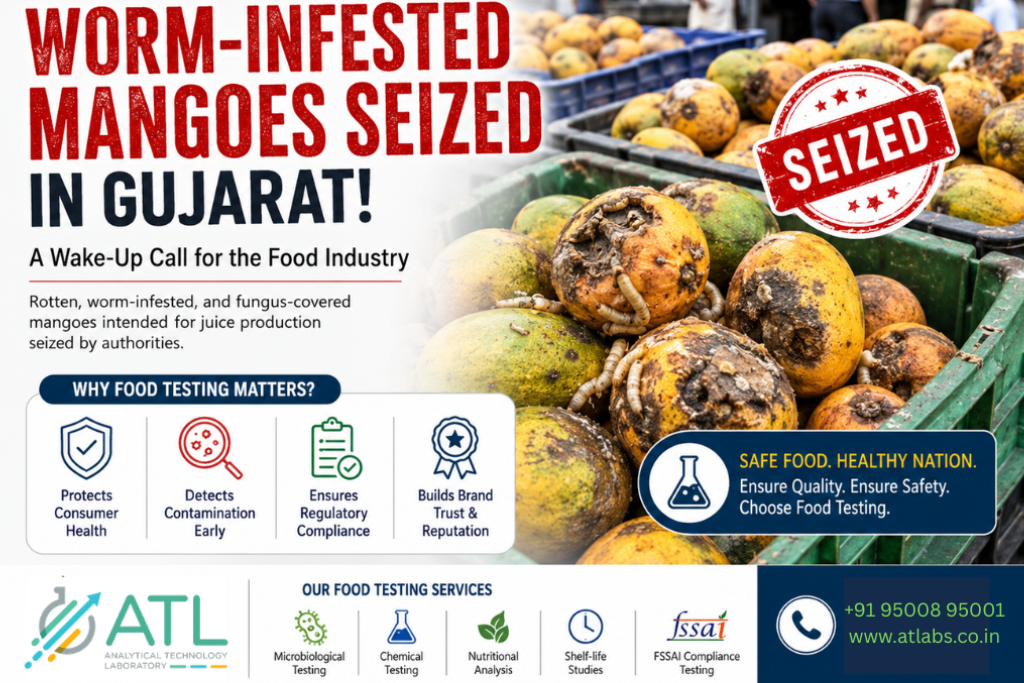
Worm-Infested Mangoes Meant for Juice Production Seized in Gujarat: A Wake-Up Call for the Food Industry A recent food safety raid in Gujarat has shocked consumers and the food industry alike. Authorities discovered a large stock of rotten, worm-infested, and fungus-contaminated mangoes allegedly intended for juice production. The contaminated fruits were seized before processing, and strict action was initiated against the operators involved. The incident has once again highlighted the importance of food safety testing, raw material quality control, and regulatory compliance in food manufacturing. Source URL: Love mangoes? Worm-infested, rotten mangoes meant for juice seized in Gujarat. Watch shocking video What Happened During the Gujarat Food Safety Raid? During an inspection conducted by food safety authorities in Mehsana, Gujarat, officials uncovered mangoes that were: Rotten and decomposing Infested with worms and insects Covered with visible fungal growth Intended for commercial juice extraction The contaminated stock was immediately seized to prevent it from entering the consumer market. Health Risks of Consuming Juice Made from Contaminated Mangoes Using spoiled fruits in food processing can pose serious health risks, including: 1. Food Poisoning Rotten fruits can harbor harmful bacteria that may cause: Nausea Vomiting Diarrhea Stomach cramps 2. Fungal Contamination and Mycotoxins Fungal growth on fruits may produce toxic compounds known as mycotoxins, which can be harmful to human health and may pose long-term risks if consumed repeatedly. 3. Increased Risk for Vulnerable Groups Children, elderly individuals, and people with weakened immune systems are especially vulnerable to foodborne illnesses caused by contaminated food products. Why Food Testing Is Essential for Food Manufacturers The Gujarat incident serves as a strong reminder that food quality should never be compromised. Food manufacturers must ensure: Raw material quality verification Microbiological testing Chemical contamination analysis Shelf-life studies Regulatory compliance testing Hygiene and safety monitoring Routine testing helps identify contamination before products reach consumers and protects both public health and brand reputation. How Food Testing Laboratories Help Prevent Such Incidents Accredited food testing laboratories play a crucial role in maintaining food safety by analyzing: Microbiological Parameters Total Plate Count Yeast & Mold E. coli Salmonella Coliform Bacteria Chemical Parameters Preservatives Heavy Metals Pesticide Residues Food Additives Quality Parameters Moisture Content Acidity Brix (Sugar Content) Nutritional Analysis These tests help manufacturers ensure their products meet regulatory standards and consumer expectations. Analytical Technology Laboratory: Supporting Safe and Quality Food Production At Analytical Technology Laboratory, we provide comprehensive food testing services to help food manufacturers, juice processors, beverage companies, and food brands maintain the highest quality standards. Our testing services include: Food Product Testing Fruit Juice Analysis Microbiological Testing Chemical Testing Shelf-Life Studies FSSAI Compliance Testing NABL Accredited Testing Services By implementing regular quality checks, businesses can prevent contamination issues, avoid regulatory action, and build consumer trust. Conclusion The recent seizure of worm-infested and fungus-covered mangoes in Gujarat is a serious reminder of the risks associated with poor food handling and inadequate quality control. Food safety is not just a regulatory requirement, it is a responsibility toward consumers. Investing in professional food testing and quality assurance can help businesses prevent contamination, maintain compliance, and deliver safe products to the market. Need reliable food testing services? Contact ATL Labs for accurate, NABL-accredited food quality and safety testing solutions. Disclaimer: This content is based on publicly available news reports and is for informational purposes only. Analytical Technology Laboratory has not independently verified the reported incident.
Best Food Testing Lab in Coimbatore for Food Manufacturers and Exporters
Best Food Testing Lab in Coimbatore for Food Manufacturers and Exporters Food safety and quality are critical factors for every food manufacturer, processor, exporter, restaurant, and food business operator. Whether you are launching a new product, maintaining regulatory compliance, or exporting food products to international markets, choosing the right food testing lab in Coimbatore can make a significant difference. Analytical Technology Laboratory is a trusted NABL accredited laboratory and FSSAI approved food testing lab providing comprehensive food quality testing services for businesses across Tamil Nadu. With advanced laboratory facilities, experienced analysts, and internationally accepted testing methodologies, ATL Labs helps food manufacturers and exporters ensure product safety, quality, and compliance. Why Food Testing is Essential for Food Manufacturers and Exporters Food products can be affected by various contaminants, including microorganisms, heavy metals, pesticide residues, toxins, and chemical impurities. Regular testing helps businesses identify potential risks before products reach consumers. Key benefits of food testing include: Compliance with FSSAI regulations Improved product quality and consistency Enhanced consumer trust Export market compliance Reduced risk of product recalls Accurate nutritional labeling Better brand reputation Working with a reliable food testing lab in Coimbatore ensures that your products meet both domestic and international quality standards. What Makes Analytical Technology Laboratory the Best Food Testing Lab in Coimbatore? When selecting a testing partner, businesses should prioritize accreditation, expertise, technology, and turnaround time. NABL Accredited Laboratory for Reliable Results Analytical Technology Laboratory operates as a NABL accredited laboratory, ensuring that testing procedures follow stringent quality management systems and internationally recognized standards. NABL accreditation demonstrates: Technical competence Accurate testing methodologies Reliable analytical results Consistent quality assurance For food manufacturers and exporters, this provides confidence that testing reports are credible and widely accepted. FSSAI Approved Food Testing Lab As an FSSAI approved food testing lab, Analytical Technology Laboratory supports food businesses in meeting regulatory requirements established by the Food Safety and Standards Authority of India. FSSAI compliance is essential for: Food manufacturers Food processing units Restaurants and hotels Exporters Importers Retail food brands Our testing reports help businesses demonstrate compliance and maintain food safety standards. Comprehensive Food Quality Testing Services Analytical Technology Laboratory offers a wide range of food quality testing services designed to meet the needs of diverse food industries. Microbiological Food Testing Microbiological testing helps identify harmful microorganisms that can affect food safety. Tests include: Total Plate Count Yeast and Mold Analysis Salmonella Detection E. coli Testing Coliform Testing Pathogen Screening Chemical Food Testing Chemical analysis helps evaluate product composition and detect harmful substances. Services include: Preservative Analysis Food Additive Testing Acidity and pH Analysis Moisture Content Analysis Fat, Protein, and Carbohydrate Testing Heavy Metal Testing Heavy metal contamination can pose serious health risks. Analytical Technology Laboratory performs testing for: Arsenic Cadmium Lead Mercury Methyl Mercury Tin Chromium and more Pesticide Residue Testing Agricultural products often require pesticide residue analysis to ensure compliance with food safety regulations and export standards. Nutritional Label Testing Food manufacturers require accurate nutritional information for packaging and labeling compliance. Our testing covers: Energy Value Protein Content Fat Content Carbohydrates Sugar Analysis Dietary Fiber Food Testing Services for Exporters Food exporters face strict quality requirements in international markets. Export shipments may require testing certifications before clearance. Analytical Technology Laboratory supports exporters through: Product quality verification Contaminant analysis Nutritional testing Regulatory compliance testing Export documentation support Choosing a professional food testing lab in Coimbatore helps exporters meet buyer specifications and global food safety standards. Industries We Serve Analytical Technology Laboratory provides testing solutions for: Dairy Industry Milk Testing Paneer Testing Cheese Testing Dairy Product Analysis Spice Industry Turmeric Testing Chilli Powder Testing Spice Blend Analysis Packaged Food Manufacturers Snacks Ready-to-Eat Foods Processed Foods Instant Mixes Beverage Industry Juices Soft Drinks Packaged Drinking Water Functional Beverages Seafood and Aquaculture Fish Testing Shrimp Testing Export Quality Verification Why Businesses Choose Analytical Technology Laboratory Businesses across Tamil Nadu trust ATL Labs because of: NABL Accredited Laboratory FSSAI Approved Food Testing Lab Experienced Analyst Team Modern Laboratory Infrastructure Fast Turnaround Time Accurate and Reliable Reports Customer-Focused Support Our commitment to quality makes ATL Labs a preferred food testing lab in Coimbatore for food manufacturers and exporters. How to Choose the Right Food Testing Lab in Coimbatore? Before selecting a laboratory, consider the following: Accreditation status Regulatory approvals Testing capabilities Industry experience Turnaround time Report accuracy Customer support Partnering with an established NABL accredited laboratory ensures dependable results and regulatory compliance. Partner with Analytical Technology Laboratory for Trusted Food Testing Services Food safety, quality assurance, and regulatory compliance are essential for sustainable business growth. Analytical Technology Laboratory delivers reliable food quality testing services backed by advanced technology, scientific expertise, and recognized accreditations. Whether you are a food manufacturer, processor, exporter, restaurant, or retailer, our testing solutions help protect your products, customers, and brand reputation. Call Now: 95008 95001 Ensure food safety and compliance with ATL Labs, your trusted food testing lab in Coimbatore. Enquiry
How to Choose the Best Animal Feed Testing Laboratory in India?

How to Choose the Best Animal Feed Testing Laboratory in India? Animal feed quality plays a crucial role in livestock health, productivity, and food safety. Whether you are a feed manufacturer, dairy farm, poultry producer, or exporter, choosing the Best Animal Feed Testing Laboratory in India is essential to ensure feed quality, nutritional value, and regulatory compliance. Poor-quality feed can lead to reduced animal performance, health issues, contamination risks, and financial losses. This is why professional laboratory testing has become a critical part of modern livestock management and feed manufacturing. In this guide, we’ll explain how to select the right laboratory and why working with a reliable testing partner can help improve feed quality and business performance. Why Animal Feed Testing Is Important Animal feed directly impacts: Livestock health Milk production Meat quality Poultry performance Feed efficiency Farm profitability Regular testing helps identify nutritional deficiencies, contaminants, toxins, heavy metals, and harmful microorganisms before they affect animal health. Professional animal feed testing services provide scientific data that helps producers make informed decisions and maintain quality standards. What Does an Animal Feed Testing Laboratory Do? An animal feed testing laboratory evaluates feed samples to determine their nutritional composition, safety, and compliance with industry standards. Typical testing includes: Nutritional Analysis Protein content Fat content Moisture Fibre Ash Energy values Microbiological Testing Salmonella E. coli Total Plate Count Yeast and Mould Contaminant Analysis Heavy metals Mycotoxins Pesticide residues Chemical contaminants Quality Verification Feed composition validation Ingredient verification Regulatory compliance testing Key Factors to Consider When Choosing the Best Animal Feed Testing Laboratory in India 1. NABL Accreditation One of the most important factors is accreditation. A NABL accredited feed testing laboratory follows internationally recognized testing standards and quality management systems. Benefits include: Reliable test results Standardized procedures Better regulatory acceptance Higher confidence in reports Always verify whether the laboratory holds current NABL accreditation for relevant feed testing parameters. 2. Testing Capabilities and Scope Not all laboratories offer the same services. Choose a laboratory that provides comprehensive animal feed testing services, including: Nutritional analysis Mycotoxin testing Heavy metal testing Microbiological testing Pesticide residue analysis A wider testing scope reduces the need to work with multiple laboratories. 3. Industry Experience The best laboratories have extensive experience working with: Poultry feed manufacturers Dairy feed producers Aquaculture feed companies Livestock feed suppliers Exporters Experienced analysts can provide better technical insights and support. 4. Advanced Laboratory Infrastructure Modern testing requires sophisticated equipment and analytical techniques. Look for laboratories equipped with: HPLC systems GC-MS & LC-MS instruments ICP-MS technology Advanced microbiology facilities Modern infrastructure improves accuracy and reliability. 5. Turnaround Time Fast reporting is essential for production planning and quality control. Ask about: Sample processing time Reporting timelines Emergency testing availability Quick turnaround helps reduce delays and operational disruptions. 6. Regulatory Compliance Expertise The best animal feed testing laboratories help businesses comply with: National regulations Export requirements Industry standards Product safety specifications Compliance support can help avoid product rejections and regulatory issues. Questions to Ask Before Choosing a Feed Testing Laboratory Before selecting a laboratory, ask: Is the laboratory NABL accredited? Accreditation confirms adherence to quality standards. What testing services are available? Ensure the laboratory offers all required feed analyses. What is the sample turnaround time? Faster reporting improves decision-making. Does the laboratory support export testing requirements? Export-focused businesses should confirm compliance capabilities. Are technical experts available for consultation? Expert guidance adds value beyond test reports. What Feed Quality Problems Can Laboratory Testing Identify? Animal feed testing helps detect hidden quality and safety issues that may affect livestock health and production. These include: Imbalanced nutrient levels Toxic mycotoxins Heavy metal contamination Microbial contamination Poor ingredient consistency Unauthorized additives or adulterants Early identification allows businesses to take corrective action and maintain high-quality feed standards. Benefits of Working with a Professional Animal Feed Testing Laboratory Choosing the Best Animal Feed Testing Laboratory in India offers several advantages: Improved Feed Quality Scientific testing helps optimize feed formulations. Better Livestock Performance Quality feed contributes to healthier animals and improved productivity. Regulatory Compliance Testing helps meet industry and export standards. Risk Reduction Early identification of contaminants prevents costly issues. Increased Customer Confidence Verified feed quality strengthens market credibility. Why Choose Analytical Technology Laboratory for Animal Feed Testing? Analytical Technology Laboratory supports feed manufacturers, livestock farms, poultry producers, and exporters with reliable laboratory testing solutions designed to improve feed quality and safety. Key capabilities include: Feed quality evaluation Nutritional content verification Feed hygiene assessment Contaminant and toxin detection Safety parameter analysis Compliance support services Our advanced laboratory facilities and experienced technical team deliver accurate results that help businesses maintain product quality and regulatory compliance. Frequently Asked Questions What is animal feed testing? Animal feed testing is the scientific analysis of feed products to evaluate nutritional quality, safety, and compliance. Why is NABL accreditation important? A NABL accredited feed testing laboratory follows recognized quality standards and delivers reliable results. How often should animal feed be tested? Testing frequency depends on production volume, ingredient changes, and regulatory requirements. What contaminants are commonly tested in animal feed? Common contaminants include mycotoxins, heavy metals, pesticide residues, and harmful bacteria. Who needs livestock feed testing services? Feed manufacturers, dairy farms, poultry producers, aquaculture businesses, livestock farms, and exporters all benefit from livestock feed testing services. Conclusion Selecting the Best Animal Feed Testing Laboratory in India is an important decision that directly impacts feed quality, animal health, productivity, and compliance. By choosing a NABL accredited feed testing laboratory with comprehensive animal feed testing services and technical expertise, businesses can ensure safer feed products and better operational performance. For professional feed testing support and expert laboratory analysis, contact Analytical Technology Laboratory today. Call Now: 95008 95001 Enquiry
Water Quality Testing for Industries in Tamil Nadu
Water Quality Testing for Industries Tamil Nadu Industries across Tamil Nadu depend on clean and safe water for manufacturing, processing, cooling, cleaning, and product quality. Proper water quality testing for industries in Tamil Nadu is essential to maintain operational efficiency, meet regulatory standards, and protect both consumers and the environment. Analytical Technology Laboratory offers professional industrial water testing services with advanced laboratory facilities, NABL-accredited testing procedures, and expert analysis support for multiple industries including food processing, textiles, agriculture, marine, and environmental sectors. Why Water Quality Testing for Industries Tamil Nadu Is Important Industrial water contamination can directly affect production quality, machinery performance, and environmental compliance. Regular testing helps industries identify harmful contaminants, maintain safety standards, and avoid costly operational failures. Benefits of Industrial Water Testing Ensures compliance with pollution control standards Protects machinery from corrosion and scaling Maintains product consistency and safety Detects microbial and chemical contamination Supports sustainable environmental practices Reduces operational risks and downtime Industries in Tamil Nadu are increasingly focusing on quality assurance and environmental responsibility. This makes water quality testing for industries Tamil Nadu a critical part of industrial operations. Types of Water Testing Services for Industries Industrial Process Water Testing Process water testing helps industries maintain the required quality standards during manufacturing operations. Parameters such as pH, hardness, dissolved solids, alkalinity, and conductivity are carefully analyzed. Wastewater and Effluent Testing Industries must comply with environmental discharge regulations before releasing wastewater into the environment. Effluent testing helps monitor pollutants and maintain compliance with Tamil Nadu Pollution Control Board norms. Drinking Water Quality Testing Safe drinking water is essential for industrial employees and workplace safety. Testing ensures water is free from harmful bacteria, heavy metals, and toxic chemicals. Boiler and Cooling Water Testing Water used in boilers and cooling systems requires regular testing to prevent corrosion, scaling, and efficiency loss. Industries That Need Water Quality Testing in Tamil Nadu Textile Industries Textile manufacturing units require clean water for dyeing, washing, and finishing processes. Water impurities can affect fabric quality and color consistency. Food Processing Industries Food manufacturers require hygienic water to maintain food safety and meet FSSAI regulations. Pharmaceutical Industries Pharmaceutical companies need highly purified water for manufacturing medicines and healthcare products. Agriculture and Aquaculture Agricultural industries depend on water and soil quality testing to improve crop production and maintain environmental safety. Manufacturing Industries Industrial manufacturing plants use water in cooling systems, cleaning processes, and production activities. Why Choose Analytical Technology Laboratory for Water Quality Testing for Industries Tamil Nadu Analytical Technology Laboratory is one of the trusted testing laboratories serving industries across Tamil Nadu with professional analytical services. Key Advantages of Analytical Technology Laboratory NABL-accredited laboratory Advanced testing infrastructure Experienced technical experts Accurate and reliable reports Fast turnaround time Industry-specific testing solutions Compliance-focused analysis Whether you need industrial water analysis, environmental testing, food safety testing, or soil analysis, Analytical Technology Laboratory provides comprehensive laboratory support. Water Quality Parameters Commonly Tested Industries often require testing for: pH Level Total Dissolved Solids (TDS) Hardness Chlorides Sulphates Heavy Metals Biological Oxygen Demand (BOD) Chemical Oxygen Demand (COD) Microbial Contamination Turbidity Regular monitoring helps industries maintain consistent operational quality and environmental compliance. Conclusion Reliable water quality testing for industries Tamil Nadu is essential for operational efficiency, product safety, and environmental responsibility. Industries across sectors depend on professional laboratory testing to meet regulatory requirements and maintain high-quality standards. Analytical Technology Laboratory offers trusted testing solutions for industrial water, environmental samples, food products, and soil analysis through advanced laboratory facilities and expert support. Call Now: 95008 95001 Frequently Asked Questions (FAQs) 1. What is water quality testing for industries in Tamil Nadu? Water quality testing for industries in Tamil Nadu involves analyzing water samples to determine physical, chemical, and microbiological parameters. It helps industries comply with environmental regulations, maintain production quality, and ensure safe water usage. 2. Why is industrial water testing important? Industrial water testing helps identify contaminants, monitor water treatment efficiency, protect equipment from corrosion and scaling, and ensure compliance with regulatory standards set by environmental authorities. 3. Which industries require water quality testing? Industries such as food processing, textiles, pharmaceuticals, manufacturing, agriculture, hospitality, and chemical processing require regular water quality testing to maintain operational efficiency and regulatory compliance. 4. How often should industries test their water quality? The testing frequency depends on industry requirements, water source, and regulatory obligations. Most industries conduct monthly, quarterly, or annual water quality assessments. 5. What parameters are tested in industrial water analysis? Common parameters include pH, Total Dissolved Solids (TDS), hardness, alkalinity, chloride, sulphate, heavy metals, dissolved oxygen, Biological Oxygen Demand (BOD), Chemical Oxygen Demand (COD), and microbiological contamination. Get Enquiry
Food Quality Testing in India: Latest 2026 Trends, FSSAI Standards & Safety Guide

Food Quality Testing in India: Latest 2026 Trends, FSSAI Standards & Safety Guide Food safety has become one of the biggest priorities for consumers, food manufacturers, restaurants, exporters, and packaged food brands across India. With rising awareness about food adulteration, contamination, chemical residues, and hygiene standards, businesses are increasingly investing in professional food quality testing in India. Today, consumers want transparency, safe ingredients, clean-label products, and scientifically tested food items before purchasing. At the same time, government regulations and export standards are becoming stricter. This has increased the demand for advanced food safety testing services and certified laboratory analysis. Modern laboratories now use AI-assisted testing systems, rapid microbiological analysis, digital reporting, and advanced contamination detection methods to ensure safer food production. At ALT businesses can access professional food testing solutions designed to meet FSSAI regulations, export requirements, and industry quality standards. What Is Food Quality Testing in India? Food quality testing in India is the process of scientifically analyzing food products to check their safety, quality, nutritional value, hygiene, and compliance with government regulations. Food testing laboratories analyze products for: Harmful bacteria and pathogens Chemical contamination Heavy metals Pesticide residues Artificial additives Food adulteration Nutritional composition Shelf life stability Food testing is essential for: Food manufacturers Restaurants and hotels Dairy industries Seafood and marine exporters Beverage companies Packaged food brands Agricultural producers Online food delivery businesses The main goal is to ensure safe food consumption while maintaining regulatory compliance and product quality. Why Food Quality Testing Is Trending in India in 2026 The food industry in India is rapidly evolving due to changing consumer expectations and stricter food safety regulations. 1. Rising Awareness About Food Adulteration Consumers are becoming more aware of: Fake ingredients Artificial colors Chemical preservatives Contaminated oils Synthetic milk products This has increased the need for regular laboratory testing. 2. Growth of Packaged & Online Food Delivery The rapid growth of: Cloud kitchens Online food delivery apps Ready-to-eat products Frozen food brands has created a stronger demand for reliable food safety testing services. 3.Export Regulations Are Becoming Stricter Indian food exporters must comply with international safety standards. Export businesses now require: Residue analysis Microbiological testing Shelf-life validation Quality certification from a NABL accredited food testing lab. 4. AI & Smart Food Testing Technologies One of the latest trends in food quality testing in India is the use of: AI-assisted analysis Automated contamination detection Digital laboratory management systems Rapid microbial testing Smart traceability systems These technologies help laboratories deliver faster and more accurate reports. How Food Quality Testing Works in India Food testing follows a systematic scientific process. Step 1: Food Sample Collection Food samples are collected carefully under controlled conditions to avoid contamination. Step 2: Laboratory Analysis Samples are tested using advanced laboratory instruments and scientific methods. The testing may include: Chemical analysis Microbiological testing Nutritional analysis Shelf life studies Heavy metal testing Step 3: Result Evaluation Laboratory experts compare the results with FSSAI standards and regulatory limits. Step 4: Final Report & Compliance A detailed report is issued showing: Test parameters Compliance status Safety observations Quality assessment Types of Food Quality Testing in India Microbiological Food Testing Microbiological testing identifies harmful microorganisms in food products. Common Tests Include: Salmonella testing E. coli detection Yeast and mold analysis Coliform testing Listeria testing This testing is essential for: Dairy products Seafood Meat products Packaged foods Ready-to-eat foods Chemical Food Testing Chemical testing detects harmful substances and verifies ingredient composition. Chemical Analysis Includes: Pesticide residue testing Heavy metal analysis Preservative analysis Artificial color detection Toxin identification Chemical testing helps businesses maintain food safety standards. Nutritional Testing Nutritional testing verifies the nutritional values printed on product labels. Nutritional Analysis Includes: Protein content Fat analysis Carbohydrate levels Vitamins Minerals Calorie calculation This testing is important for packaged foods and health-focused products. Shelf Life Testing Shelf life testing determines how long a food product remains safe and stable. This helps businesses: Decide expiry dates Improve packaging Reduce spoilage Maintain freshness Food Adulteration Testing Food adulteration testing identifies impurities and unauthorized substances in food products. Common Adulteration Checks: Artificial milk contamination Synthetic food colors Low-quality oils Adulterated spices Chemical preservatives Role of FSSAI Food Testing in India FSSAI food testing helps ensure that food businesses comply with legal safety requirements. FSSAI Food Testing Covers: Hygiene standards Label verification Product safety Packaging compliance Maximum residue limits Food additives regulation FSSAI compliance is mandatory for food manufacturers, restaurants, and food brands operating in India. Why Businesses Prefer NABL Accredited Food Testing Labs Choosing a NABL accredited food testing lab ensures accurate and internationally accepted test results. Benefits of NABL Accredited Laboratories Accurate Testing Results Advanced scientific methods improve reliability. Regulatory Compliance Businesses can meet FSSAI and export regulations. International Acceptance Reports are accepted for global trade and exports. Better Brand Trust Consumers prefer scientifically tested food products. Improved Product Quality Regular testing helps maintain product consistency. Food Safety Challenges in India The Indian food industry still faces several safety challenges. Common Food Safety Issues Food adulteration Chemical contamination Poor hygiene practices Improper storage conditions Contaminated water usage Excessive pesticide residues Professional laboratory testing helps reduce these risks. Industry Why Food Safety Testing Is Important Common Testing Requirements Dairy Industry Milk and dairy products are highly sensitive to contamination and adulteration. Microbiological testing, adulteration testing, antibiotic residue analysis Marine & Seafood Industry Seafood products require freshness and contamination analysis to ensure safety. Heavy metal testing, microbial testing, freshness analysis Packaged Food Manufacturers Processed food brands must maintain product quality and accurate labelling. Nutritional analysis, shelf-life testing, preservative testing Restaurants & Hotels Hospitality businesses need hygienic food preparation and safe serving conditions. Swab testing, microbiological testing, hygiene analysis Export Businesses Exporters must comply with international food safety and quality standards. Residue analysis, compliance testing, certification testing Latest Food Testing Trends in India Rapid Testing Technologies Modern labs now use rapid testing systems for faster results. AI-Based Food Safety Monitoring AI-assisted analysis improves contamination detection accuracy. Sustainable & Clean Label Testing Consumers increasingly prefer preservative-free and
