Why Product Testing Is Essential for Regulatory Compliance in India
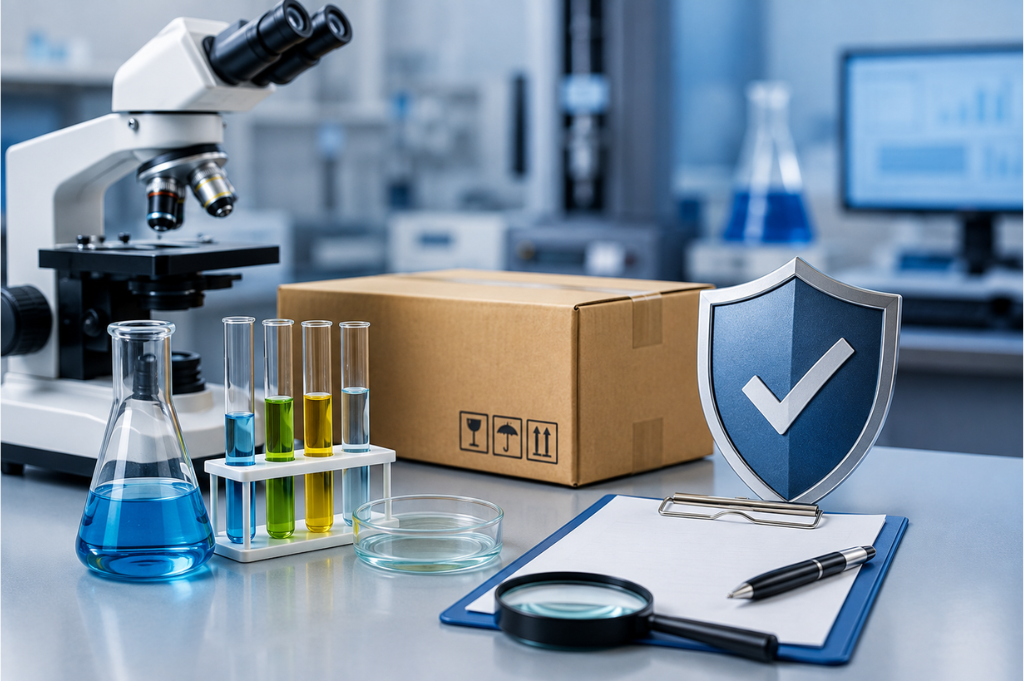
Why Product Testing Is Essential for Regulatory Compliance in India In today’s competitive manufacturing environment, product quality is no longer just about meeting customer expectations. Manufacturers must also understand the Product Compliance Regulations in India that may apply to their products, industries, and markets. From raw materials to finished products, testing can help businesses evaluate whether products meet relevant quality, safety, and performance requirements. Depending on the product category, applicable requirements may involve Indian Standards, sector-specific regulations, certification schemes, labelling rules, or other regulatory obligations. For some products, compliance with relevant Indian Standards becomes mandatory through government-issued Quality Control Orders (QCOs). BIS also evaluates manufacturing infrastructure, process controls, quality control and testing capabilities as part of applicable product certification processes. This makes product testing an important part of a proactive compliance and quality strategy. Understanding Product Compliance Regulations in India Product Compliance Regulations in India are not governed by one single requirement for every product. The applicable rules can vary based on factors such as: Product category Intended use Industry sector Applicable Indian Standards Safety requirements Manufacturing processes Labelling and marking requirements Whether certification or regulatory approval is mandatory For example, BIS notes that while its certification scheme is generally voluntary, certain products are subject to compulsory certification when the government mandates compliance with applicable Indian Standards through relevant orders. Therefore, manufacturers should first identify which requirements apply to their specific product rather than assuming that the same compliance process applies to every industry. Why Product Testing Matters for Regulatory Compliance Product testing provides measurable information about the characteristics and performance of a product or sample. Depending on the product and applicable requirements, testing may evaluate: Physical characteristics Chemical composition Microbiological parameters Performance properties Safety-related parameters Contaminants Material quality Other relevant specifications This information can help manufacturers identify potential issues before products move further through the supply chain. Testing Helps Verify Conformity One of the key benefits of product testing is its ability to provide evidence about whether a product conforms to relevant specifications or standards. For BIS product certification, conformity to applicable standards may be established through third-party laboratory testing, testing at the manufacturing premises, or a combination of both, depending on the applicable process. This demonstrates why testing capabilities are closely connected with Regulatory Compliance for Products. Quality Compliance in Manufacturing Starts Early Waiting until the final stage of production to identify a problem can lead to unnecessary costs. A better approach is to build testing and quality checks into different stages of manufacturing. 1. Raw Material Testing Testing incoming materials can help identify variations or potential quality concerns before they affect production. 2. In-Process Testing Monitoring relevant parameters during manufacturing can help businesses detect deviations at an earlier stage. 3. Finished Product Testing Testing the final product can provide valuable data on whether it meets relevant specifications and intended quality requirements. This structured approach supports stronger Quality Compliance in Manufacturing and can help reduce: Rework Material wastage Product rejection Customer complaints Supply chain issues Quality-related business risks Product Safety Regulations in India and Testing Product Safety Regulations in India vary across industries. Products such as food, consumer goods, industrial materials, and other regulated categories may have different safety and compliance requirements. In the food sector, for example, FSSAI states that food testing and analysis are essential to the food safety ecosystem and recognizes/notifies eligible NABL-accredited food laboratories for relevant analysis under the Food Safety and Standards framework. This highlights an important principle: a product may appear acceptable visually while still requiring scientific testing to evaluate parameters that cannot be identified through inspection alone. Product Testing and Quality Inspection: Better Together Product testing and quality inspection serve different purposes. Quality inspection may focus on: Appearance Dimensions Packaging Labelling Visible defects Quantity and workmanship Laboratory testing can provide analytical information about parameters that require scientific examination. For manufacturers, combining appropriate testing and inspection activities can create a more comprehensive quality assurance process. A typical approach may look like: Raw Material Evaluation → Testing → Manufacturing Controls → Quality Inspection → Final Product Assessment The exact process should always be based on the product, applicable standards, and regulatory requirements. How Manufacturers Can Improve Regulatory Compliance Businesses can take a proactive approach by following these steps: Identify Applicable Requirements Determine which laws, standards, certification requirements, or sector-specific regulations apply to the product. Define Testing Requirements Identify the relevant parameters, test methods, sampling requirements, and testing frequency where applicable. Build Quality Controls into Manufacturing Quality should be monitored throughout the manufacturing process instead of only at the final stage. Maintain Proper Documentation Test reports, inspection records, quality procedures, and other required documents can support traceability and demonstrate that appropriate processes are being followed. Stay Updated Product Compliance Regulations in India can evolve. Manufacturers should regularly review updates from relevant authorities and standards bodies to understand changes that may affect their products. How ATL Labs Can Support Your Testing Requirements ATL Labs provides testing and inspection services across areas including food, water, environmental, textile, marine and aquaculture testing. The laboratory’s services are designed to support businesses in evaluating quality, safety, performance, and relevant compliance requirements. The right testing plan depends on your product, industry, applicable standards, and specific regulatory requirements. ATL Labs can help businesses understand their testing requirements and obtain relevant analytical and inspection support. Need Professional Testing Support? If you are looking to strengthen your Quality Compliance in Manufacturing or understand the testing requirements for your products, contact ATL Labs. 📞 Call Now: +91 95008 95001 For enquiries and testing support: Contact ATL Labs Final Thoughts Product testing is an important part of a strong compliance strategy. It can help manufacturers identify potential quality and safety issues, evaluate relevant product characteristics, and generate data that supports informed decision-making. However, compliance requirements are product- and sector-specific. The most effective approach is to identify the applicable Product Compliance Regulations in India, understand the relevant standards, and develop an appropriate testing and quality control process. By making testing a proactive part of manufacturing,
Top 10 Soil Testing Laboratories in India for Accurate Soil Analysis

Top 10 Soil Testing Laboratories in India for Accurate Soil Analysis Soil is one of the most important natural resources for agriculture, construction, environmental management and industrial activities. However, the quality and composition of soil cannot always be determined by visual inspection alone. Professional soil testing laboratories in India help analyze important soil characteristics and provide data that can support informed decisions. From nutrient availability and soil fertility to pH, salinity and potential contamination, laboratory testing plays an important role in understanding soil quality. Whether you are a farmer, agricultural business, industry, environmental consultant or project developer, choosing a reliable laboratory is essential for obtaining meaningful and accurate test results. In this article, we explore the importance of soil testing and factors to consider when choosing from the top soil testing laboratories in India. What Is Soil Testing and Why Is It Important? Soil testing is the laboratory analysis of soil samples to determine their physical, chemical and, where applicable, biological characteristics. Depending on the purpose of testing, soil analysis may help identify parameters such as: Soil pH Electrical conductivity Organic carbon Macronutrients Micronutrients Soil fertility indicators Salinity Heavy metals Other contaminants Accurate soil analysis can support better decision-making for agriculture, environmental assessments and land-related projects. Top 10 Soil Testing Laboratories in India The following list highlights laboratories and organizations involved in soil analysis and testing services in India. The suitability of a laboratory should always be evaluated based on the specific parameters required, applicable standards, accreditation scope, location and sample requirements. 1. ATL Labs – Soil Testing Services in Tamil Nadu ATL Labs provides analytical testing services for different industries and applications. Its testing capabilities can support requirements related to environmental and analytical testing. For customers looking for Soil Testing Services in Tamil Nadu, selecting a laboratory based on the required testing parameters and applicable accreditation scope is important. ATL Labs can assist customers in understanding sample submission and testing requirements based on their specific application. Need soil testing support? Call Now: +91 95008 95001 You can also visit the ATL Labs Contact Page to submit an enquiry. 2. Government Soil Testing Laboratories Government-operated soil testing facilities play an important role in supporting farmers and agricultural development programs. These laboratories may provide testing services related to: Soil fertility Nutrient levels Soil pH Salinity Fertilizer recommendations Availability and testing parameters may vary depending on the state and local agricultural department. 3. Agricultural University Soil Testing Laboratories Many agricultural universities and research institutions operate laboratories focused on soil testing for agriculture. Their work may include: Soil fertility analysis Nutrient testing Agricultural research Soil management studies These facilities can be valuable resources for agricultural research and specialized testing requirements. 4. NABL Accredited Soil Testing Laboratories Choosing a NABL Accredited Soil Testing Laboratory can be important when your project, customer or regulatory requirement specifically requires testing within an accredited scope. Before selecting a laboratory, customers should verify: The laboratory’s current accreditation status Whether the required soil parameter is included in its scope The applicable test method Sample quantity and collection requirements Accreditation should always be checked for the specific testing requirement rather than relying only on a general accreditation claim. 5. Environmental Testing Laboratories Environmental laboratories may provide soil analysis for projects involving environmental monitoring, land assessment and contamination studies. Testing may include parameters related to: Heavy metals Chemical contaminants Soil characteristics Environmental quality These services can be relevant for industrial sites, environmental assessments and land development projects. 6. Industrial Soil Testing Laboratories Industrial projects may require soil analysis for environmental compliance, waste management, site assessments or other technical purposes. A laboratory may test soil samples for selected physical and chemical parameters depending on the project requirements. Before submitting samples, it is important to clearly define the purpose of testing and the parameters required. 7. Agricultural Soil Analysis Laboratories Agricultural laboratories focus primarily on understanding soil fertility and nutrient availability. Soil Testing for Agriculture can help farmers and agricultural businesses better understand soil conditions before making decisions related to crop and nutrient management. Common areas of analysis may include: pH Electrical conductivity Organic carbon Nitrogen Phosphorus Potassium Selected micronutrients The required parameters can vary based on crop type, soil conditions and agricultural objectives. 8. Private Analytical Testing Laboratories Private analytical laboratories may offer customized soil testing services for businesses, consultants and project owners. They can be useful when customers require: Specific testing parameters Defined turnaround times Technical documentation Testing based on project specifications When comparing laboratories, it is important to review their technical capability for the specific analysis required. 9. Research and Specialized Soil Laboratories Specialized laboratories and research institutions may conduct advanced soil studies for scientific, environmental or industrial applications. These laboratories can support projects requiring specialized methods or detailed analytical investigations. 10. Regional Soil Testing Laboratories Regional laboratories can be a practical choice when sample transportation and turnaround time are important considerations. Businesses and individuals searching for soil testing laboratories in India should consider both laboratory capability and logistics before selecting a testing provider. How to Choose the Best Soil Testing Laboratory in India Not every laboratory performs the same tests. Before selecting a laboratory, consider the following factors. Check the Required Testing Parameters Start by identifying what you need to test. For example, agricultural soil testing may require nutrient and fertility parameters, while environmental soil analysis may require heavy metal or contamination testing. Verify Accreditation Scope If your project requires a NABL Accredited Soil Testing Laboratory, verify that the laboratory’s accreditation scope covers the specific parameter and method you require. Understand Sample Collection Requirements Improper sample collection can affect the usefulness of laboratory results. Before collecting or sending a sample, confirm: Required sample quantity Sample container Collection procedure Preservation requirements Labelling requirements Consider Laboratory Location and Logistics For customers looking for Soil Testing Services in Tamil Nadu or other regions, transportation time and sample handling requirements may also influence laboratory selection. Compare Turnaround Time and Reporting Requirements Ask about: Expected turnaround time Testing parameters Applicable methods Reporting format Any
What Food Quality Tests Are Required in India? Complete Testing List for Food Businesses

What Food Quality Tests Are Required in India? Complete Testing List for Food Businesses What Food Quality Tests Are Required in India? For food manufacturers, startups, processors, exporters, restaurants and other food businesses, maintaining consistent product quality is essential for food safety, compliance and consumer trust. But one common question is: Which food quality tests are actually required in India? The answer depends on the type of food, ingredients, processing method, intended market and applicable regulatory requirements. There is no single testing package that applies to every food product. Food quality testing in India may include microbiological, chemical, nutritional, contaminant, residue, physical and other product-specific analyses. The Food Safety and Standards Authority of India (FSSAI) maintains regulations covering food product standards, contaminants, toxins and residues, laboratory analysis, labelling and other food-safety requirements. These regulations are also amended periodically, so businesses should verify the requirements applicable to their specific product. For businesses planning a new product, expanding production or preparing for market, working with a competent Food Testing Laboratory can help identify the appropriate testing requirements. Why Is Food Quality Testing Important for Food Businesses? Food testing is more than a regulatory exercise. It can help businesses understand whether their products meet defined quality and safety parameters. Regular testing can help businesses: Verify product quality and consistency Identify potential microbiological hazards Monitor chemical and physical parameters Detect contaminants and unwanted residues Support food safety programs Validate product specifications Support shelf-life evaluation Investigate quality issues Strengthen supplier and raw-material controls Build consumer confidence Support regulatory and customer requirements For growing food brands, laboratory testing can also provide objective evidence behind quality-related decisions. Complete List of Food Quality Tests in India The exact tests required depend on the product. However, the following categories cover many of the common areas considered during food quality evaluation. 1. Microbiological Testing Microbiological food safety testing helps identify microorganisms that may affect food safety or quality. Common parameters include: Total Plate Count Yeast & Mould Coliforms E. coli Salmonella Staphylococcus aureus The exact tests depend on the food category and applicable standards. 2. Chemical Testing Chemical analysis helps verify the composition and quality of food products. Depending on the product, testing may include: Moisture Protein Fat Ash Carbohydrates Acidity pH Salt Sugar 3. Nutritional Testing Nutritional analysis can help businesses verify information used for product specifications and applicable nutrition declarations. Common parameters include: Energy Protein Total Fat Carbohydrates Sugars Dietary Fibre Sodium Vitamins and minerals 4. Heavy Metal Testing Certain foods and raw materials may require testing for contaminants such as: Lead Arsenic Cadmium Mercury The relevant parameters and limits depend on the food category and applicable regulations. 5. Pesticide Residue Testing For agricultural commodities and foods containing agricultural ingredients, pesticide residue testing can be an important part of food safety evaluation. It may be relevant for: Fruits & vegetables Cereals Pulses Spices Tea & coffee Processed foods Businesses looking for a Pesticide Residue Testing Laboratory in India should select a laboratory with suitable capabilities and applicable testing methods. 6. Mycotoxin Testing Mycotoxins can occur in certain agricultural commodities and may require testing depending on the product. Commonly relevant products include: Cereals Nuts Spices Oilseeds 7. Antibiotic & Veterinary Drug Residue Testing For certain animal-origin foods, testing may be required for relevant antibiotic and veterinary drug residues. 8. Food Additive Testing Depending on the product, testing may cover relevant: Preservatives Food colours Sweeteners Antioxidants Other permitted additives 9. Adulteration & Authenticity Testing Laboratory analysis can also help investigate potential adulteration, substitution, incorrect composition, or product authenticity concerns. 10. Shelf-Life Testing Shelf-life studies help businesses understand how a product changes during storage. Testing may consider: Microbiological stability Moisture Oxidation Chemical changes Sensory characteristics Which Tests Does Your Food Product Need? There is no single testing package for every food product. The appropriate testing plan should consider: Product → Ingredients → Processing → Storage → Intended Market → Regulatory Requirements For example, the testing requirements for spices, dairy products, packaged water, edible oils, bakery products, seafood, and ready-to-eat foods can be very different. Therefore, businesses should identify the applicable requirements before selecting a test panel. How to Choose a Food Testing Laboratory in India Choosing the right laboratory is an important step in building an effective testing program. Consider: Relevant testing capabilities Applicable accreditation scope Appropriate analytical methods Qualified technical personnel Proper sampling procedures Laboratory quality systems Reporting requirements Product-specific experience Turnaround requirements FSSAI also publishes food-analysis manuals and specifies methods of analysis for various food products. Businesses should therefore select a laboratory based on the specific parameters and methods required for their product, rather than choosing solely on price or turnaround time. Food Quality Testing in India: A Practical Checklist Before sending a sample to a laboratory, prepare the following information: Product name Clearly identify the food product. Ingredient information Provide relevant raw-material and formulation details where required. Manufacturing information Include batch or lot information and relevant manufacturing details. Intended testing purpose Mention whether the testing is for routine QC, product development, compliance, export or investigation. Target market Domestic and export requirements may differ. Required parameters Discuss the appropriate test panel with the laboratory. Sampling requirements Follow appropriate sampling, packaging and transportation instructions. This preparation can make the testing process more efficient and help ensure that the selected analysis matches the actual business requirement. Build Consumer Trust Through Testing Consumers want confidence in the food products they purchase. Consistent laboratory testing can help food businesses strengthen their quality-control processes and demonstrate a commitment to food safety, quality, and compliance. Quality → Safety → Compliance → Consistency → Consumer Trust Testing does not replace good manufacturing practices, but it can be an important part of an effective food-safety system. Conclusion Food quality testing in India covers several areas, including microbiological, chemical, nutritional, contaminant, pesticide residue, mycotoxin, additive, and shelf-life testing. The right tests depend on your specific food product and applicable requirements. If you’re unsure which tests your product needs, consult a qualified Food Testing Laboratory before sending your
Where Can I Find a Pesticide Residue Analysis Laboratory in India?
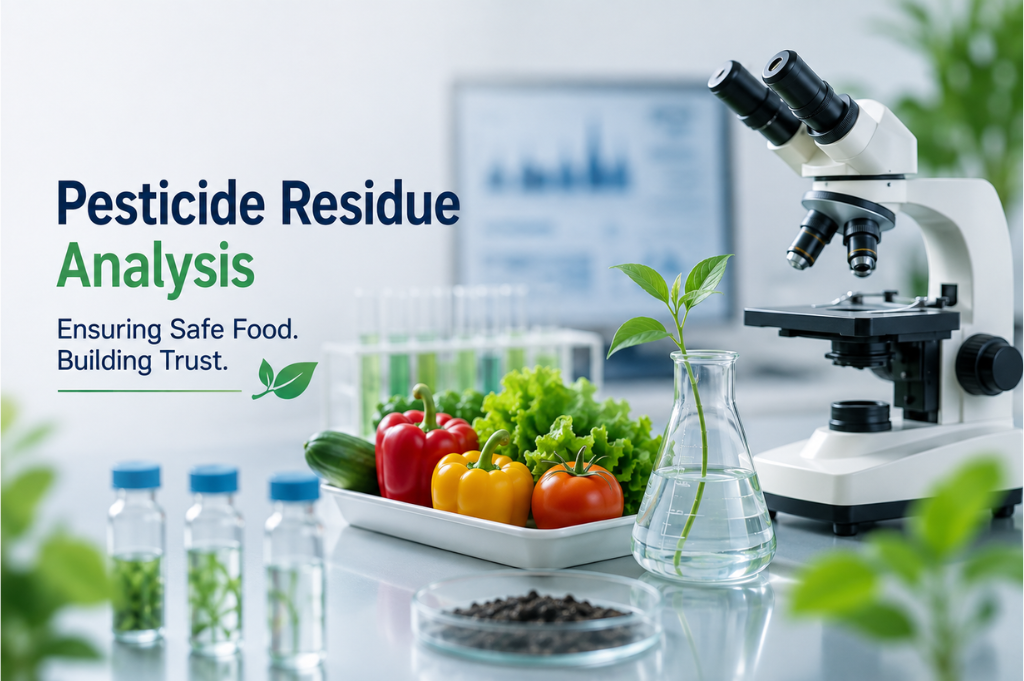
Where Can I Find a Pesticide Residue Analysis Laboratory in India? Food safety has become a top priority for consumers, food manufacturers, exporters, retailers, and regulatory authorities. One of the biggest concerns in today’s food supply chain is the presence of pesticide residues in agricultural products. While pesticides help protect crops from pests and diseases, excessive or unauthorized residues can pose risks to food quality and regulatory compliance. If you’re wondering, “Where can I find a pesticide residue analysis laboratory in India?”, the answer lies in choosing a reliable, experienced, and NABL Accredited Food Testing Laboratory that follows validated testing methods and uses advanced analytical technology. Whether you’re a farmer, exporter, food manufacturer, distributor, or retailer, professional pesticide residue analysis is essential for ensuring food safety, meeting regulatory requirements, and protecting your brand reputation. What Is a Pesticide Residue Analysis Laboratory? A pesticide residue analysis laboratory in India specializes in detecting and measuring pesticide residues present in food products and agricultural commodities. These laboratories use advanced instruments such as GC-MS/MS and LC-MS/MS to identify pesticide residues at very low concentrations. Testing helps businesses verify that products comply with national and international food safety standards before reaching consumers or export markets. Why Is Pesticide Residue Analysis Important? Pesticides are commonly used during cultivation to improve crop yield and protect plants. However, residues may remain on fruits, vegetables, grains, spices, pulses, tea, coffee, herbs, and processed food if not managed properly. Professional laboratory testing helps: Protect consumer health Support food safety compliance Meet export requirements Improve product quality Reduce the risk of product recalls Build customer confidence Regular testing is an important part of a robust food safety management system. How to Choose the Right Pesticide Residue Analysis Laboratory in India Not all laboratories offer the same level of expertise or capabilities. When selecting a laboratory, consider the following factors. NABL Accreditation Choose a NABL Accredited Food Testing Laboratory that follows recognized quality management systems and validated analytical procedures. Accreditation demonstrates technical competence and reliability. Advanced Analytical Technology Modern pesticide residue testing requires sophisticated equipment capable of detecting multiple pesticide compounds with high accuracy and sensitivity. Experienced Technical Team Qualified analysts and laboratory professionals help ensure accurate sample handling, testing, interpretation, and reporting. Comprehensive Food Testing Services A laboratory that offers a wide range of testing services allows businesses to meet multiple quality and safety requirements through one trusted partner. What Products Can Be Tested? A professional Food Testing Laboratory India can perform pesticide residue analysis on a wide range of products, including: Fruits Vegetables Rice Wheat Pulses Spices Tea Coffee Herbs Dry fruits Processed foods Edible oils Baby food Organic products Testing supports quality assurance throughout the food supply chain. Why Agricultural Product Testing Matters Agricultural Product Testing plays an important role in ensuring food safety from farm to consumer. Regular testing helps identify pesticide residues before products enter the market. Benefits include: Improved food quality Better regulatory compliance Enhanced export readiness Consumer confidence Reduced business risks Farmers, exporters, processors, and food manufacturers all benefit from proactive testing programs. How Food Testing Laboratories Support Exporters International buyers often require laboratory reports demonstrating compliance with Maximum Residue Limits (MRLs) established by importing countries. A trusted Food Testing Laboratory India helps exporters by: Detecting pesticide residues Supporting export documentation Meeting buyer specifications Reducing shipment rejection risks Strengthening international market access Reliable testing helps businesses compete confidently in global markets. Why Choose a NABL Accredited Food Testing Laboratory? Working with a NABL Accredited Food Testing Laboratory offers several advantages: Standardized testing procedures Reliable analytical results Qualified technical professionals Calibrated laboratory equipment Consistent quality assurance Greater confidence in test reports Accredited laboratories help businesses demonstrate their commitment to food safety and quality. Why Choose ATL Labs? ATL Labs is a trusted pesticide residue analysis laboratory in India, offering reliable food testing services for manufacturers, exporters, importers, retailers, and agricultural businesses. Our capabilities include: Pesticide Residue Analysis Food Safety Testing Microbiological Testing Heavy Metal Analysis Nutritional Analysis Contaminant Testing Chemical Analysis Agricultural Product Testing Using advanced analytical instruments and standardized testing methods, our experienced team delivers accurate and dependable results to support regulatory compliance and product quality. Frequently Asked Questions 1. Why should food businesses perform pesticide residue testing? Pesticide residue testing helps verify food safety, support regulatory compliance, reduce product risks, and improve consumer confidence. 2. What is Agricultural Product Testing? Agricultural Product Testing involves laboratory analysis of crops and food products to assess quality, pesticide residues, contaminants, and other safety parameters. 3. What is a NABL Accredited Food Testing Laboratory? A NABL Accredited Food Testing Laboratory is independently assessed for technical competence and follows internationally recognized quality management systems. 4. Which products require pesticide residue analysis? Common products include fruits, vegetables, cereals, spices, herbs, tea, coffee, edible oils, processed foods, and organic products. 5. Can exporters benefit from pesticide residue testing? Yes. Laboratory testing helps exporters meet international residue standards, reduce shipment rejections, and satisfy buyer requirements. Conclusion Finding a reliable pesticide residue analysis laboratory in India is essential for businesses committed to food safety, regulatory compliance, and product quality. Whether you are involved in farming, food processing, manufacturing, or exports, regular laboratory testing helps identify pesticide residues, reduce business risks, and build customer trust. Choosing a NABL Accredited Food Testing Laboratory with expertise in Agricultural Product Testing and comprehensive food analysis ensures accurate, dependable results that support both domestic and international market requirements. 📞 Call Now: +91 95008 95001
FSSAI’s Action on “100% Pure” Claims: Understanding the Risks of Misleading Food Labels
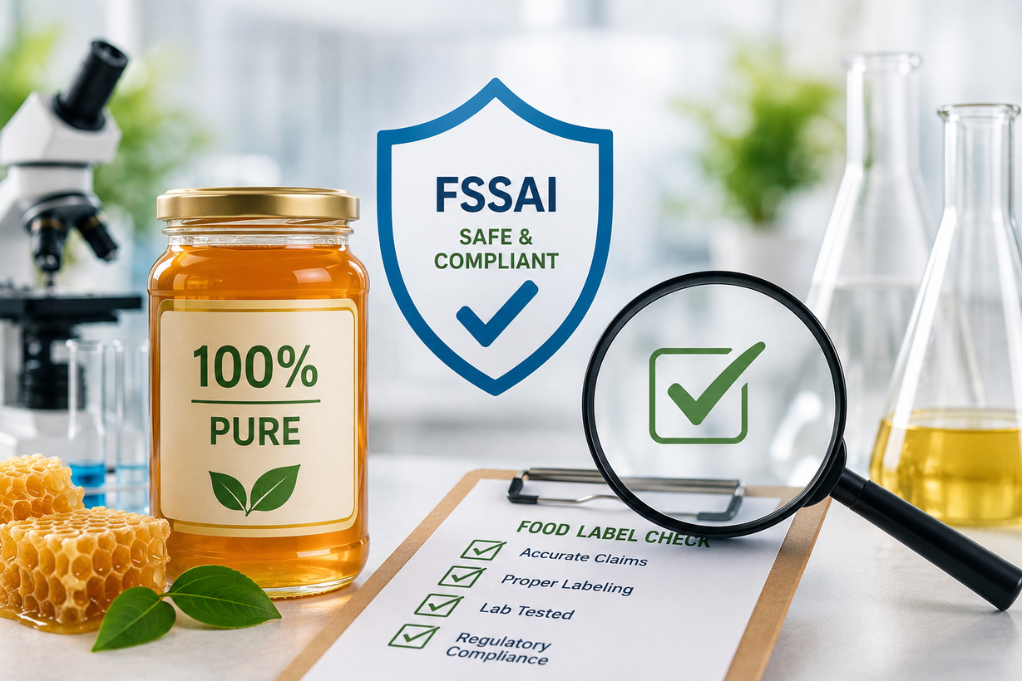
FSSAI’s Action on “100% Pure” Claims: What Every Food Manufacturer Should Know Consumer trust begins with honest product labeling. Whether it is honey, fruit juice, edible oil, dairy products, spices, or packaged foods, labels must accurately represent what consumers are buying. Recently, FSSAI directed action against products marketed with the claim “100% Pure”, raising concerns that the wording could mislead consumers if it is not fully supported by product composition and regulatory requirements. Although the case focuses on one manufacturer, it serves as an important reminder for every food and beverage business in India to review their labeling practices, product claims, and quality assurance processes. Source URL: ‘100% pure’? Stop misleading products’ sale, FSSAI tells Dabur What Is the Problem? The main concern is the use of the phrase “100% Pure” on food products. According to FSSAI, such claims may be considered misleading if: They create a false impression about the product. The claim cannot be scientifically verified. It suggests superiority over similar products without evidence. Consumers may interpret the wording differently from the actual product composition. The labeling does not fully comply with FSSAI regulations. Food labels must provide accurate, truthful, and verifiable information without exaggerating product qualities. Why Is FSSAI Concerned? FSSAI’s role is to protect consumers by ensuring that food labels are transparent and not misleading. The regulator expects manufacturers to: Use accurate product descriptions. Declare ingredients correctly. Avoid exaggerated marketing claims. Support claims with scientific evidence. Follow Food Safety and Standards (Labelling and Display) Regulations. This helps consumers make informed purchasing decisions based on reliable information. Reasons Why Products Face Regulatory Action Food businesses may receive regulatory notices for several reasons, including: 1. Unsupported Product Claims Claims such as 100% Pure, Natural, Chemical-Free, or No Preservatives should be backed by evidence. 2. Incorrect Labeling Missing or inaccurate ingredient declarations, nutritional information, or mandatory labeling details can result in non-compliance. 3. Lack of Scientific Validation Without laboratory testing, businesses may struggle to justify marketing claims during inspections. 4. Failure to Follow Updated Regulations Food regulations are periodically updated, making it essential for businesses to review labels regularly. 5. Consumer Protection FSSAI prioritizes preventing misleading information that could influence consumer purchasing decisions unfairly. Business Risks of Misleading Claims Using unsupported or misleading claims can lead to: FSSAI notices Product recalls or withdrawal Financial losses Brand reputation damage Consumer complaints Increased regulatory inspections Reduced customer confidence For manufacturers, prevention is far less costly than corrective action. How Laboratory Testing Helps? Independent laboratory testing provides scientific evidence to support product quality and labeling. Testing can verify: Ingredient composition Product purity Nutritional values Chemical parameters Microbiological safety Heavy metals Pesticide residues Adulteration Product consistency These reports help businesses demonstrate compliance with regulatory requirements. Why NABL-Accredited Testing Matters Choosing a NABL-accredited laboratory ensures: Accurate and reliable results Validated testing methods Qualified technical experts Internationally accepted quality standards Stronger regulatory confidence Better support during audits How ATL Labs Supports Food Businesses ATL Labs provides comprehensive food testing solutions to help manufacturers meet FSSAI requirements and maintain consumer trust. Our services include: Chemical Analysis Microbiological Testing Nutritional Analysis Food Adulteration Testing Heavy Metal Analysis Pesticide Residue Testing Shelf-Life Studies Water Testing Packaging Material Testing Regulatory Support Testing Our NABL-accredited laboratory helps businesses validate product quality, support labeling claims, and strengthen compliance with Indian food safety regulations. Best Practices for Manufacturers To reduce compliance risks: Review all product labels before launch. Validate marketing claims with laboratory evidence. Conduct routine product testing. Maintain detailed quality documentation. Stay updated with FSSAI regulations. Perform periodic internal audits. Work with NABL-accredited laboratories. Conclusion The recent discussion around “100% Pure” claims highlights the importance of truthful labeling and scientific validation in today’s food industry. As regulatory oversight continues to strengthen, food manufacturers must ensure that every claim on their packaging is accurate, evidence-based, and compliant with FSSAI requirements. By partnering with a trusted NABL-accredited laboratory like ATL Labs, businesses can confidently verify product quality, support compliance, and build long-term consumer trust. Ensure Your Product Claims Stand Up to Regulatory Scrutiny Whether you’re launching a new food product, updating packaging, or validating quality claims, ATL Labs provides accurate, NABL-accredited food testing services to help you meet FSSAI standards with confidence. Contact ATL Labs today to safeguard your brand through reliable food testing and regulatory compliance. Disclaimer: This content is based on publicly available news reports and is for informational purposes only. Analytical Technology Laboratory has not independently verified the reported incident.
FSSAI’s Action on Artificial Flavouring: What Food & Beverage Manufacturers Need to Know
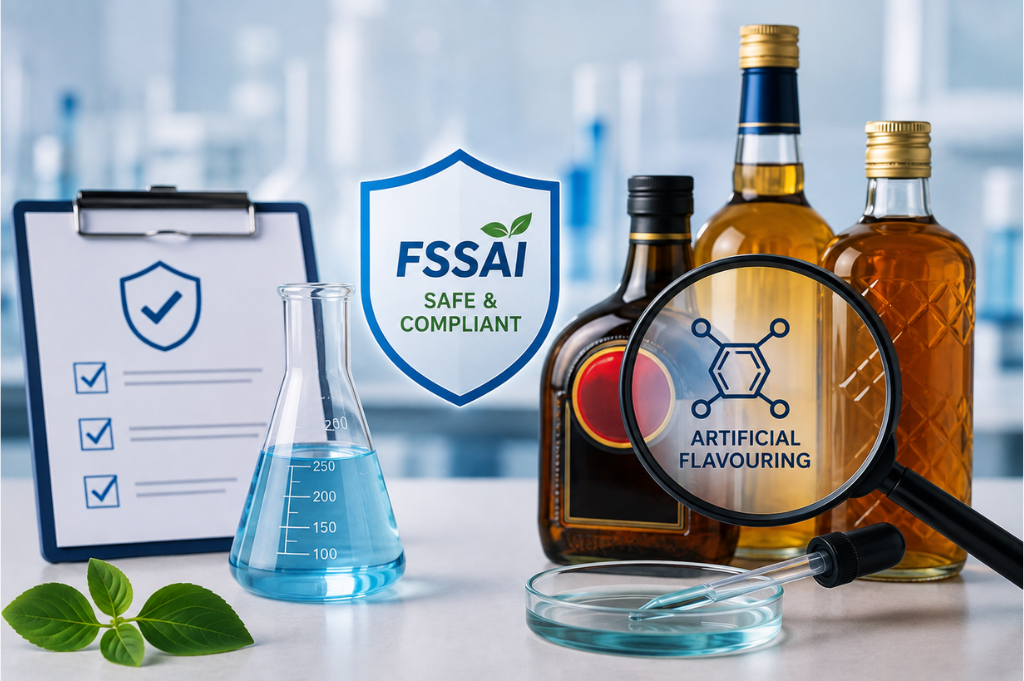
FSSAI’s Action on Artificial Flavouring: Why Regulatory Compliance Matters for Food & Beverage Manufacturers The Food Safety and Standards Authority of India (FSSAI) recently took regulatory action concerning certain alcoholic beverage variants over the alleged use of artificial flavouring that did not comply with applicable standards. Although the enforcement specifically involves alcoholic beverages, the implications extend across the entire food and beverage industry. Manufacturers today face increasing scrutiny over ingredients, product formulations, labeling, and regulatory compliance. This development highlights the importance of scientific testing, transparent labeling, and quality assurance throughout the manufacturing process. Source URL: FSSAI bars sale of Old Monk variant, Bagpiper, Royal Challenge over artificial flavouring What Was the Issue? According to recent reports, FSSAI directed action after identifying concerns regarding the use of artificial flavouring in specific alcoholic beverage variants. The regulator emphasized that manufacturers must comply with the Food Safety and Standards (Alcoholic Beverages) Regulations and ensure that ingredients and flavouring agents meet prescribed standards. The action demonstrates FSSAI’s commitment to: Consumer safety Product authenticity Accurate ingredient declarations Regulatory compliance Transparent labeling Why Is Artificial Flavouring a Regulatory Concern? Artificial flavouring is not inherently unsafe when used according to approved regulations. However, regulatory issues can arise when: Non-permitted flavouring substances are used. Ingredients are not declared correctly. Product labels are misleading. Formulations do not comply with FSSAI standards. Manufacturers fail to follow prescribed manufacturing practices. Regulatory authorities evaluate whether products accurately represent their composition and comply with applicable food safety standards. Problems Food & Beverage Manufacturers May Face If products do not meet regulatory requirements, businesses may encounter several challenges. 1. Regulatory Notices FSSAI may issue notices requiring manufacturers to explain non-compliance or take corrective action. 2. Product Withdrawal Products that fail to comply with regulations may need to be withdrawn from the market until compliance issues are resolved. 3. Damage to Brand Reputation Consumer trust can be significantly affected when regulatory actions become public. 4. Financial Losses Product recalls, relabeling, inventory replacement, and legal expenses can increase operational costs. 5. Supply Chain Disruptions Distributors and retailers may temporarily suspend sales until regulatory concerns are addressed. Root Causes Behind Compliance Issues Many regulatory actions result from preventable quality management gaps rather than intentional violations. Common causes include: Inadequate raw material verification Poor supplier qualification Lack of ingredient testing Insufficient formulation validation Incorrect labeling Outdated regulatory knowledge Limited internal quality audits Absence of routine laboratory testing How Laboratory Testing Helps Prevent These Problems Independent laboratory testing is one of the most effective ways to reduce compliance risks before products reach consumers. Food and beverage testing can help verify: Ingredient composition Product formulation Artificial and natural flavour profiles Chemical parameters Contaminants Heavy metals Microbiological safety Product consistency Regulatory compliance Testing provides scientific evidence that supports product quality and labeling claims. Why NABL-Accredited Testing Is Important A NABL-accredited laboratory follows internationally recognized testing standards and quality management systems. Benefits include: Accurate analytical results Reliable testing methods Regulatory confidence Improved product quality Better export readiness Reduced compliance risks How ATL Labs Supports Manufacturers ATL Labs provides comprehensive laboratory testing solutions for food and beverage manufacturers to support quality assurance and regulatory compliance. Our services include: Food Chemical Analysis Beverage Testing Microbiological Testing Nutritional Analysis Heavy Metal Analysis Pesticide Residue Testing Shelf-Life Studies Food Adulteration Testing Water Testing Regulatory Support Testing Our NABL-accredited laboratory helps businesses identify potential quality issues early, maintain compliance with FSSAI regulations, and strengthen consumer confidence. Best Practices for Manufacturers To reduce regulatory risks, food and beverage businesses should: Verify all raw materials before production. Conduct routine laboratory testing. Validate product formulations. Review labels periodically. Keep documentation up to date. Monitor changes in FSSAI regulations. Perform regular internal audits. Partner with NABL-accredited laboratories. Conclusion The recent FSSAI action serves as an important reminder that regulatory compliance extends beyond manufacturing; it includes ingredient selection, formulation, labeling, documentation, and scientific validation. For food and beverage manufacturers, investing in regular laboratory testing and quality assurance is essential for protecting consumers, maintaining compliance, and safeguarding brand reputation. By partnering with a trusted NABL-accredited laboratory like ATL Labs, businesses can confidently meet regulatory requirements while delivering safe, high-quality products to the market. Ensure Your Products Meet FSSAI Standards with ATL Labs Whether you manufacture beverages, packaged foods, dairy products, spices, edible oils, or nutritional products, ATL Labs offers accurate, NABL-accredited testing services to help you verify product quality, support regulatory compliance, and build consumer trust. Contact ATL Labs today to learn how our food and beverage testing solutions can support your business. Disclaimer: This content is based on publicly available news reports and is for informational purposes only. Analytical Technology Laboratory has not independently verified the reported incident.
10 Reasons to Choose a Water Testing Laboratory in Tamil Nadu for Safe Drinking Water
10 Reasons to Choose a Water Testing Laboratory in Tamil Nadu for Safe Drinking Water Access to clean and safe drinking water is essential for protecting public health. While water may appear clear and odorless, it can still contain harmful microorganisms, heavy metals, chemicals, and other contaminants that are invisible to the naked eye. That’s why professional laboratory testing has become increasingly important for homes, industries, educational institutions, hospitals, and commercial establishments. Choosing a trusted Water Testing Laboratory in Tamil Nadu ensures your water is scientifically analyzed for safety, quality, and compliance with applicable standards. Whether you rely on municipal water, borewell water, or packaged drinking water, regular testing helps identify potential issues before they become health risks. At ATL Labs, we provide comprehensive water testing services using advanced analytical instruments and standardized testing procedures to deliver reliable results. Why Choosing a Water Testing Laboratory in Tamil Nadu Matters Water quality can vary due to natural minerals, industrial activities, agricultural runoff, aging pipelines, or improper storage. Regular laboratory testing helps detect these issues early and supports informed decisions about water treatment and usage. Professional Water Quality Analysis helps ensure your drinking water meets safety standards while protecting your family, employees, customers, and business operations. 1. Accurate Water Quality Analysis Professional laboratories use validated analytical methods and advanced equipment to evaluate physical, chemical, and microbiological parameters. Comprehensive Water Quality Analysis includes testing for: pH Total Dissolved Solids (TDS) Hardness Chlorides Sulphates Fluoride Heavy Metals Microbiological Contamination Accurate testing provides reliable information about your water quality. 2. Detect Hidden Contaminants Many contaminants cannot be detected through appearance, taste, or smell. Laboratory testing identifies: Bacteria Viruses Heavy metals Chemical contaminants Nitrates Pesticide residues Excess minerals Regular testing helps prevent potential health risks associated with contaminated water. 3. Choose a NABL Accredited Water Testing Laboratory Selecting a NABL Accredited Water Testing Laboratory ensures testing follows recognized quality standards and validated procedures. Benefits include: Reliable results Qualified laboratory professionals Calibrated instruments Standardized testing methods Consistent quality assurance Accredited laboratories provide reports trusted by industries, institutions, and regulatory authorities. 4. Ensure Safe Drinking Water Water testing verifies whether drinking water is suitable for consumption. Testing helps identify: Disease-causing microorganisms Chemical contamination Excess fluoride Heavy metals Water hardness Safe drinking water contributes to improved public health and reduced health risks. 5. Support Industrial and Commercial Compliance Industries often require laboratory testing to monitor water quality used in manufacturing processes. Professional testing supports: Regulatory compliance Quality assurance Process consistency Equipment protection Customer confidence Routine monitoring reduces operational risks and supports efficient production. 6. Chemical Water Testing in Coimbatore for Better Water Management Businesses and industries in Coimbatore increasingly rely on Chemical Water Testing in Coimbatore to evaluate water quality for production, processing, and environmental compliance. Chemical analysis helps measure: Alkalinity Chlorides Sulphates Iron Calcium Magnesium Heavy metals Dissolved solids Accurate chemical testing supports better water management decisions. 7. Identify Water Problems Before They Become Serious Routine laboratory testing helps detect water quality issues before they affect health or business operations. Early detection can help prevent: Pipeline corrosion Scale formation Equipment damage Poor product quality Waterborne illnesses Preventive testing is more cost-effective than addressing problems after they occur. 8. Suitable for Homes, Industries, and Institutions A professional Water Testing Laboratory in Tamil Nadu serves various sectors, including: Residential Properties Drinking water testing Borewell water analysis Apartment water quality Industries Process water Boiler water Cooling water Industrial water quality Institutions Schools Hospitals Hotels Commercial buildings Customized testing helps meet specific water quality requirements. 9. Build Confidence Through Reliable Laboratory Reports Laboratory reports provide valuable insights into water quality and support informed decision-making. Reliable reports help: Verify water safety Support compliance Improve water treatment planning Demonstrate quality assurance Build trust with stakeholders Scientific analysis provides confidence that water meets intended usage requirements. 10. Protect Health, Business, and the Environment Safe water benefits individuals, communities, and businesses alike. Routine water testing helps: Protect public health Maintain regulatory compliance Improve operational efficiency Reduce maintenance costs Support sustainable water management Investing in professional laboratory testing is a proactive step toward long-term safety and quality. Why Choose ATL Labs? ATL Labs is a trusted Water Testing Laboratory in Tamil Nadu, providing comprehensive laboratory testing services for residential, commercial, industrial, and institutional clients. Our services include: Drinking Water Testing Borewell Water Testing Packaged Drinking Water Testing Industrial Water Testing Wastewater Analysis Microbiological Water Testing Water Quality Analysis Chemical Water Testing in Coimbatore We use advanced laboratory equipment, validated testing methods, and experienced technical professionals to deliver accurate and dependable results. Frequently Asked Questions 1. Why should I test my drinking water regularly? Regular testing helps identify harmful microorganisms, chemicals, heavy metals, and other contaminants that may not be visible. 2. What does a NABL Accredited Water Testing Laboratory offer? A NABL Accredited Water Testing Laboratory follows internationally recognized quality systems, validated methods, and standardized testing procedures to deliver reliable results. 3. What is included in Water Quality Analysis? Water Quality Analysis typically evaluates physical, chemical, and microbiological parameters such as pH, TDS, hardness, heavy metals, bacteria, and other quality indicators. 4. Why is Chemical Water Testing Important? Chemical Water Testing in Coimbatore helps identify dissolved chemicals, minerals, heavy metals, and other contaminants that may affect water safety, industrial processes, or product quality. 5. Who should use professional water testing services? Homeowners, industries, food manufacturers, hospitals, schools, hotels, commercial establishments, and institutions can all benefit from regular laboratory water testing. Conclusion Choosing a reliable Water Testing Laboratory in Tamil Nadu is one of the most effective ways to ensure safe drinking water, maintain regulatory compliance, and protect public health. Professional Water Quality Analysis provides accurate insights into water quality, while Chemical Water Testing in Coimbatore supports industries and businesses in maintaining operational efficiency and product quality. Whether you need residential, commercial, or industrial water testing, partnering with a trusted NABL Accredited Water Testing Laboratory gives you confidence that your water has been analyzed using recognized scientific methods and quality standards. 📞 Call Now: +91 95008 95001
Chemical Testing for Export Products: Why It Matters
Chemical Testing for Export Products: Why It Matters? Expanding into global markets requires more than just a quality product; it requires proof of safety and compliance. Professional Chemical Testing Labs in Coimbatore help exporters verify product quality, meet international regulations, and reduce the risk of shipment rejections. Choosing a NABL Accredited Chemical Testing Laboratory ensures accurate testing and reliable results for successful exports. Why Chemical Testing Is Essential for Export Products Every importing country has its own regulations regarding chemical composition, contaminants, hazardous substances, and product safety. Exporters must demonstrate compliance before products can enter international markets. Chemical testing helps businesses: Verify product quality Meet international regulatory standards Identify restricted chemicals Ensure product consistency Reduce export risks Build customer confidence Prevent shipment rejection Choosing experienced Chemical Testing Labs in Coimbatore ensures your products undergo accurate analysis using internationally recognized testing methods. Why International Buyers Demand Chemical Testing Global buyers increasingly require independent laboratory reports before accepting shipments. Common reasons include: Regulatory compliance Product safety verification Chemical composition analysis Environmental compliance Consumer protection Brand protection Quality assurance Laboratory reports from a NABL Accredited Chemical Testing Laboratory provide credibility and confidence throughout the supply chain. Export Industries That Require Chemical Testing Many industries depend on laboratory analysis before exporting products. Food Industry Food products require testing for: Preservatives Additives Heavy metals Moisture Nutritional composition Chemical contaminants Textile Industry Textile manufacturers often require testing for: Restricted chemicals pH value Formaldehyde Color fastness chemicals Azo dyes Chemical residues Pharmaceutical Industry Testing includes: Active ingredients Purity Stability Chemical composition Impurity analysis Chemical Manufacturing Manufacturers perform Industrial Chemical Testing to verify: Raw material quality Finished product composition Product consistency Regulatory compliance Water & Environmental Industry Chemical testing evaluates: Heavy metals Total dissolved solids Fluoride Chlorides Sulphates Nitrates Water quality parameters How Chemical Testing Helps Meet International Standards Export markets require compliance with various international regulations. Chemical testing supports compliance with: ISO standards Country-specific import regulations Customer quality specifications Safety guidelines Industry certification requirements Professional testing reduces uncertainty before shipment. Common Chemical Tests Required for Export Products Depending on the product category, laboratories perform various analyses. Chemical Analysis Moisture Ash Protein Fat Acidity pH Chemical composition Heavy Metal Testing Detection of: Lead Mercury Cadmium Arsenic Residual Chemical Testing Analysis of: Solvents Preservatives Additives Chemical residues Industrial Chemical Testing Evaluation of: Product purity Material composition Stability Performance characteristics Benefits of Choosing Chemical Testing Labs in Coimbatore Working with a professional laboratory provides several advantages. 1. Accurate Results Advanced laboratory instruments deliver reliable analytical reports. 2. Faster Turnaround Time Timely reports help businesses meet export deadlines. 3. Regulatory Compliance Testing supports domestic and international compliance requirements. 4. Reduced Business Risks Early identification of chemical issues prevents shipment rejection. 5. Improved Product Quality Routine testing helps manufacturers maintain consistent quality. 6. Increased Buyer Confidence Verified laboratory reports enhance customer trust. 7. Cost Savings Preventive testing reduces costly recalls, rework, and export delays. Why Choose a NABL Accredited Chemical Testing Laboratory? Selecting a NABL Accredited Chemical Testing Laboratory ensures testing is conducted according to recognized quality standards. Benefits include: Scientifically validated methods Qualified laboratory professionals Calibrated instruments Reliable analytical reports International acceptance Consistent quality management Accredited laboratories provide confidence that results are accurate, repeatable, and accepted by customers and regulatory authorities. How to Choose the Right Chemical Laboratory Near Me When searching for a Chemical Laboratory Near Me, consider the following factors: Look for: NABL Accreditation Experienced analysts Modern testing equipment Comprehensive testing services Industry expertise Fast reporting Technical support Strong customer service Selecting the right laboratory helps ensure accurate results and smooth export processes. Why ATL Labs Is a Trusted Choice ATL Labs offers comprehensive chemical testing services to industries across Coimbatore, Tamil Nadu, and beyond. Our testing capabilities include: Industrial Chemical Testing Food Chemical Analysis Water Testing Environmental Testing Textile Chemical Testing Material Testing Heavy Metal Analysis Chemical Composition Analysis Our experienced technical team uses validated testing methods and advanced laboratory instruments to deliver dependable, high-quality reports. Frequently Asked Questions (FAQs) 1. Why is chemical testing important before exporting products? Chemical testing verifies that products comply with international quality, safety, and regulatory requirements, reducing the risk of shipment rejection. 2. What products require Industrial Chemical Testing? Industries such as food, textiles, pharmaceuticals, chemicals, water treatment, and manufacturing commonly require Industrial Chemical Testing before export. 3. Why should I choose a NABL Accredited Chemical Testing Laboratory? NABL accreditation demonstrates that a laboratory follows recognized quality management systems and validated testing procedures, producing reliable and widely accepted results. 4. How do I find a reliable Chemical Laboratory Near Me? Choose a laboratory with NABL accreditation, experienced professionals, modern equipment, comprehensive testing capabilities, and a proven track record. 5. Can chemical testing help improve product quality? Yes. Regular testing helps identify quality issues early, supports process improvements, and ensures products consistently meet customer and regulatory expectations. Conclusion Chemical testing is essential for ensuring export products meet global quality and safety standards. By partnering with trusted Chemical Testing Labs in Coimbatore, businesses can improve compliance, enhance product quality, and build confidence with international buyers. Choose ATL Labs for accurate, reliable, and timely chemical testing services to support your export success. 📞 Call Now: +91 95008 95001
8 Reasons Food Testing Saves Businesses from Costly Recalls

8 Reasons Food Testing Saves Businesses from Costly Recalls Introduction A single food recall can cost a business far more than replacing products. It can damage customer trust, disrupt operations, invite regulatory action, and impact long-term profitability. Whether you’re a food manufacturer, processor, exporter, restaurant, or retailer, investing in professional food testing is one of the smartest decisions you can make. Working with a Food Analysis Laboratory Coimbatore helps identify safety risks before products reach consumers. Comprehensive testing verifies product quality, confirms regulatory compliance, and supports your commitment to food safety. If your business is looking for reliable laboratory services, choosing a NABL Accredited Food Testing Laboratory ensures accurate, scientifically validated results that meet industry standards. Why Food Recalls Are Becoming More Common Food recalls are increasing due to stricter regulations, enhanced surveillance, and growing consumer awareness. Common reasons include: Microbial contamination Chemical contamination Undeclared allergens Excess pesticide residues Heavy metal contamination Incorrect nutritional labeling Packaging contamination Non-compliance with FSSAI regulations These issues can often be detected early through comprehensive laboratory analysis. 1. Detects Harmful Microorganisms Before Products Reach Consumers One of the leading causes of food recalls is microbial contamination. Professional food laboratories test for organisms such as: Common Microbial Tests Salmonella E. coli Listeria Staphylococcus aureus Yeast and Mold Total Plate Count Early detection prevents contaminated products from entering the market, protecting both consumers and your brand. 2. Ensures Compliance with FSSAI Regulations Every Food Business Operator (FBO) is responsible for supplying safe food under FSSAI guidelines. Comprehensive FSSAI Food Testing helps businesses: Meet regulatory requirements Validate food quality Avoid penalties Support licensing and audits Demonstrate due diligence Routine laboratory testing strengthens your compliance program and reduces regulatory risks. 3. Identifies Chemical Contaminants Early Food products may become contaminated through raw materials, processing, packaging, or environmental exposure. A qualified Food Analysis Laboratory Coimbatore performs chemical analysis for: Chemical Analysis Includes Food additives Preservatives Artificial colors Heavy metals Moisture Protein Fat Ash Acidity pH Nutritional parameters Early identification helps manufacturers take corrective action before products are distributed. 4. Prevents Costly Pesticide Residue Issues Agricultural products often require testing for pesticide residues before processing or export. A trusted Pesticide Residue Testing Laboratory India helps detect residues that exceed permissible limits. Testing is particularly important for: Fruits Vegetables Cereals Spices Tea Coffee Pulses Regular residue testing helps businesses meet domestic and international food safety requirements. 5. Protects Brand Reputation Years of brand building can be damaged by a single product recall. Consumers today expect: Safe food Transparent quality practices Regulatory compliance Reliable brands Routine food testing demonstrates your commitment to quality and builds long-term customer confidence. 6. Supports Export Quality Requirements Export markets often require laboratory reports before accepting food shipments. Many countries require testing for: Export Food Testing Microbiology Heavy metals Pesticide residues Nutritional analysis Food additives Shelf-life parameters Working with a NABL Accredited Food Testing Laboratory helps businesses meet international documentation requirements and minimize shipment rejections. 7. Reduces Financial Losses Food recalls involve much more than replacing products. Potential costs include: Product destruction Transportation Warehousing Legal expenses Customer compensation Brand recovery Production downtime Lost sales Preventive testing is significantly more cost-effective than managing the consequences of a recall. 8. Improves Overall Product Quality Food testing is not just about safety it also supports consistent product quality. Regular analysis helps manufacturers: Standardize production Improve consistency Monitor raw materials Verify finished products Reduce customer complaints Enhance shelf life Continuous quality monitoring strengthens operational efficiency and customer satisfaction. Why Choose a NABL Accredited Food Testing Laboratory? Choosing a NABL Accredited Food Testing Laboratory offers several advantages: Benefits Accurate analytical results Standardized testing methods Qualified technical experts Calibrated laboratory equipment Regulatory acceptance Reliable reporting Improved customer confidence Accredited laboratories follow internationally recognized quality management systems, ensuring dependable results for every sample. Choosing the Right Food Analysis Laboratory Coimbatore When selecting a laboratory, consider: Look for NABL Accreditation Modern analytical instruments Experienced scientists Comprehensive testing capabilities Fast turnaround time Regulatory expertise Transparent reporting Excellent customer support Partnering with a trusted laboratory ensures dependable testing and long-term quality assurance. Why Choose Analytical Technology Laboratory Labs? Analytical Technology Laboratory provides professional food testing solutions for businesses across Tamil Nadu and beyond. Our services include: Food Safety Testing Chemical Analysis Microbiological Testing Nutritional Analysis Shelf-Life Studies Water Testing Environmental Testing Pesticide Residue Analysis Heavy Metal Testing Our experienced technical team delivers accurate reports using validated methods to help businesses comply with applicable food safety requirements. Conclusion Food recalls can have serious financial, operational, and reputational consequences. Investing in regular laboratory testing helps identify risks early, supports compliance with food safety regulations, and strengthens consumer confidence. Whether you require FSSAI Food Testing, chemical analysis, microbiological testing, or services from a trusted Pesticide Residue Testing Laboratory India, choosing a reliable Food Analysis Laboratory Coimbatore is a proactive step toward protecting your business and your customers. 📞 Call Now: +91 95008 95001
Industrial Water Testing Explained: Benefits of Choosing a NABL Accredited Laboratory
Industrial Water Testing Explained: Benefits of Choosing a NABL Accredited Laboratory Industrial water is more than just a utility; it is a critical resource that directly impacts product quality, manufacturing efficiency, equipment lifespan, environmental compliance, and public safety. Whether your business operates in food processing, textiles, pharmaceuticals, engineering, chemicals, or manufacturing, regular water testing is essential to maintain consistent operations and meet regulatory requirements. Choosing a NABL-accredited industrial water testing laboratory ensures your water quality is evaluated using internationally recognized testing methods, calibrated instruments, and technically competent professionals. This provides confidence in every test report and helps businesses make informed operational decisions. If you’re searching for a trusted water testing laboratory in Tamil Nadu, partnering with a reputable laboratory like ATL Labs can help your organization stay compliant while protecting both your products and your reputation. Why Industrial Water Testing Is Essential Industrial facilities use water for numerous applications, including: Manufacturing processes Boiler feed water Cooling towers Cleaning and sanitation Food production Textile processing Chemical manufacturing Laboratory operations Poor-quality water can lead to: Product contamination Equipment corrosion Scale formation Production downtime Increased maintenance costs Regulatory penalties Customer complaints Routine testing helps detect potential issues before they become costly problems. What Is an Industrial Water Testing Laboratory? An industrial water testing laboratory specializes in analyzing water used across industrial operations. These laboratories evaluate physical, chemical, and microbiological parameters to determine whether water meets applicable standards and operational requirements. A professional laboratory provides reliable data that helps businesses: Monitor water quality Improve process efficiency Ensure regulatory compliance Prevent equipment failures Protect employee and consumer health Support environmental sustainability Why Choose a NABL Accredited Industrial Water Testing Laboratory? NABL (National Accreditation Board for Testing and Calibration Laboratories) accreditation demonstrates that a laboratory operates according to internationally accepted quality standards. Choosing a NABL-accredited laboratory offers several advantages. Accurate and Reliable Test Results Accurate laboratory results are essential for operational decision-making. NABL-accredited laboratories follow validated testing procedures, use calibrated instruments, and maintain stringent quality assurance systems. This ensures confidence in every report. Competent Technical Experts Testing is performed by trained professionals who understand water chemistry, analytical methods, and industry-specific requirements. Their expertise helps organizations interpret results correctly and identify practical corrective actions. Internationally Accepted Testing Standards Accredited laboratories perform testing according to recognized standards such as: IS Standards APHA Methods BIS Guidelines ISO-based procedures Industry-specific regulatory requirements This improves the credibility of laboratory reports during audits and customer assessments. Better Regulatory Compliance Industries are expected to comply with various environmental and quality regulations. Regular testing helps organizations demonstrate compliance with applicable standards and maintain documentation during inspections. Chemical Water Analysis: Why It Matters Chemical water analysis evaluates the chemical composition of industrial water to determine whether it is suitable for its intended application. Monitoring chemical parameters helps prevent operational issues that may affect machinery, production quality, and safety. Common parameters include: pH Total Dissolved Solids (TDS) Total Hardness Chlorides Sulphates Nitrates Fluoride Alkalinity Conductivity Dissolved Oxygen Chemical Oxygen Demand (COD) Biological Oxygen Demand (BOD) Regular chemical water analysis enables industries to optimize water treatment processes and reduce operational risks. Heavy Metal Testing in Water: Protecting Health and Industry One of the most important aspects of industrial water quality assessment is heavy metal testing in water. Heavy metals may enter water through: Industrial discharge Mining activities Corroded pipelines Manufacturing waste Groundwater contamination Common heavy metals analyzed include: Lead Mercury Cadmium Arsenic Chromium Nickel Copper Zinc Iron Manganese Excessive concentrations may affect: Product quality Human health Environmental safety Regulatory compliance Routine heavy metal testing in water helps industries identify contamination early and implement corrective measures. Industries That Need Industrial Water Testing An industrial water testing laboratory supports a wide range of sectors. Food and Beverage Industries Water directly affects product quality, hygiene, and food safety. Regular testing helps manufacturers comply with regulatory expectations and maintain consumer confidence. Textile Industries Water quality influences dyeing consistency, fabric finishing, and equipment performance. Poor water quality can increase production costs and reduce finished product quality. Pharmaceutical Industries Pharmaceutical manufacturing demands highly controlled water quality to maintain product safety and consistency. Chemical Industries Water quality impacts reaction efficiency, equipment life, and manufacturing performance. Engineering and Manufacturing Testing helps prevent corrosion, scaling, and machinery damage while improving operational efficiency. Educational Institutions and Hospitals Safe water is essential for laboratories, patient care, sanitation, and campus operations. Benefits of Choosing a Water Testing Laboratory in Tamil Nadu Businesses searching for a dependable water testing laboratory in Tamil Nadu benefit from working with a regional laboratory that understands local industrial requirements and regulatory expectations. Advantages include: Faster sample collection Quick report turnaround Technical consultation Local industry expertise Reliable customer support Cost-effective testing services For industries operating across Tamil Nadu, timely testing minimizes delays and supports uninterrupted operations. How Often Should Industrial Water Be Tested? Testing frequency depends on: Industry type Water source Regulatory requirements Manufacturing process Customer specifications Risk assessment Many organizations perform: Monthly monitoring Quarterly analysis Annual compliance testing Testing before commissioning new systems Testing after maintenance activities A qualified laboratory can recommend an appropriate testing schedule based on your operational needs. Why Businesses Trust ATL Labs? Analytical Technology Laboratory is a trusted industrial water testing laboratory offering professional analytical services backed by quality systems and technical expertise. Businesses choose ATL Labs because of: NABL-accredited testing Experienced technical professionals Advanced analytical instruments Accurate and reliable reports Fast turnaround time Comprehensive chemical water analysis Advanced heavy metal testing in water Customer-focused technical support Whether you are a manufacturer, exporter, institution, or industrial facility,Analytical Technology Laboratory provides dependable testing solutions that help protect quality, ensure compliance, and improve operational performance. Conclusion Water quality plays a vital role in every industrial process. Choosing a NABL-accredited industrial water testing laboratory ensures accurate analysis, reliable reporting, and confidence in every decision your business makes. From chemical water analysis to heavy metal testing in water, routine testing helps industries maintain compliance, reduce operational risks, improve product quality, and safeguard public health. If you are looking for a trusted water testing
