
Oil Quality Testing in India: A Complete Guide to Laboratory Testing
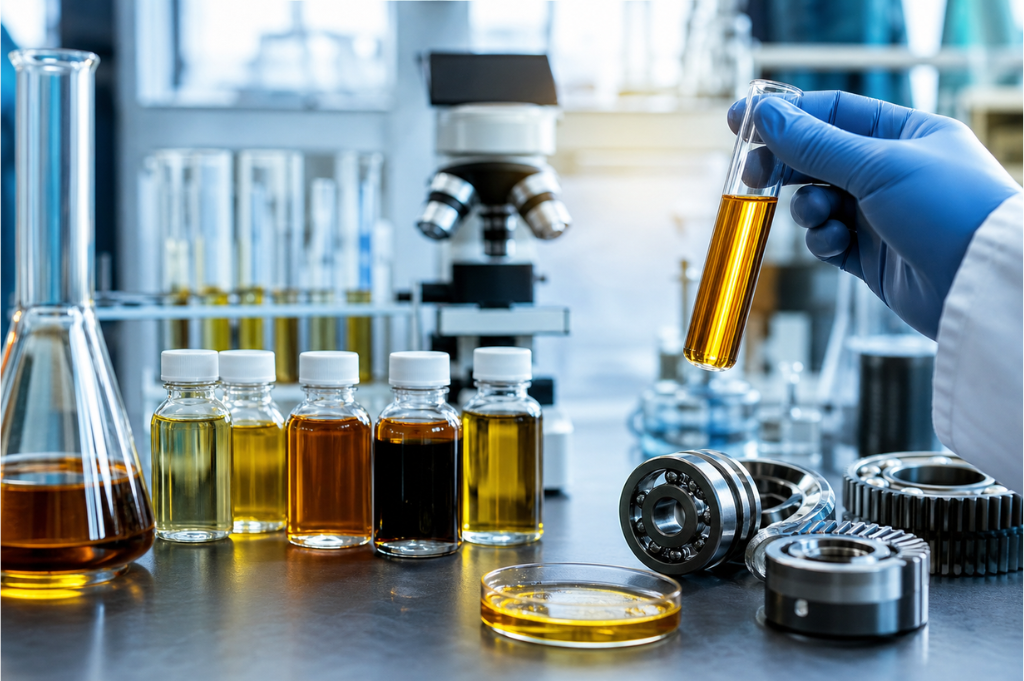
Oil products are used across many industries, including manufacturing, automotive, engineering, energy, and industrial operations. Their quality can directly affect equipment performance, product consistency, safety, and operational efficiency.
Oil quality testing in India helps businesses understand whether an oil product meets the required specifications and is suitable for its intended application. Laboratory analysis can identify important characteristics such as viscosity, density, flash point, water content, contamination, and other relevant parameters.
For businesses that depend on petroleum products, lubricants, and industrial oils, laboratory testing provides reliable data for quality control and informed decision-making.
What Is Oil Quality Testing?
Oil quality testing is the laboratory analysis of an oil sample to determine its physical, chemical, and performance-related characteristics.
Depending on the type and application of the oil, laboratories may examine different parameters. The selected tests should be based on the product specification, intended use, applicable standards, and customer requirements.
Professional oil quality testing in India can help manufacturers, suppliers, industrial users, and other businesses verify product quality before use or delivery.
Why Is Oil Quality Testing Important?
Oil that does not meet the required specifications may affect equipment operation, product performance, or process consistency.
Laboratory testing can help businesses:
- Verify the quality of incoming oil products
- Check whether products meet specified requirements
- Identify possible contamination
- Monitor changes in oil condition
- Support quality-control programs
- Investigate oil-related performance issues
- Maintain consistent product quality
- Generate documented laboratory test results
Instead of relying only on appearance or basic physical checks, laboratory analysis provides measurable information about the sample.
What Parameters Are Tested in Oil Products?
The parameters selected for analysis depend on the type of oil and the purpose of testing.
1. Viscosity
Viscosity indicates how easily an oil flows under specified conditions. It is an important property for many lubricants and industrial oils because it can influence lubrication and equipment operation.
2. Density
Density helps characterize an oil product and can be useful for quality control and product identification.
3. Flash Point
Flash point testing determines the temperature at which an oil sample produces vapour that can ignite under specified test conditions. This parameter is particularly relevant when evaluating the handling and safety characteristics of petroleum-based products.
4. Water Content
Water contamination can affect the performance and condition of certain oils. Laboratory testing can help determine the presence or level of water in a sample.
5. Contamination and Impurities
Testing may be used to identify unwanted contaminants or impurities that could affect oil quality or equipment performance.
6. Chemical and Performance Parameters
Depending on the oil product, additional chemical or performance-related parameters may be tested according to applicable specifications and standards.
Oil Testing Laboratory in Tamil Nadu: What Should Businesses Look For?
Businesses searching for an oil testing laboratory in Tamil Nadu should consider factors beyond the availability of individual tests.
Important considerations include:
- Relevant laboratory testing capabilities
- Appropriate testing methods
- Qualified technical personnel
- Suitable laboratory infrastructure
- Quality-management practices
- Applicable accreditation or recognition
- Clear test reports
- Sample handling and traceability
- Testing requirements relevant to the product
The laboratory should also be able to explain which parameters are appropriate for the specific oil product and testing objective.
Lubricant Testing Laboratory Services
Lubricants are designed to reduce friction, protect components, and support reliable equipment operation. Their properties need to remain within appropriate specifications for their intended application.
A lubricant testing laboratory may conduct tests based on the type of lubricant and the customer’s requirements.
Testing may support:
- Incoming lubricant quality checks
- Product quality control
- Comparative analysis
- Investigation of performance issues
- Research and development
- Specification verification
- Condition monitoring
The exact test package should always be selected according to the lubricant type, application, and applicable specification.
Petroleum Product Testing in India
Petroleum products can have different characteristics and testing requirements depending on their composition and intended application.
Petroleum product testing in India can help businesses evaluate specified physical and chemical properties of products such as fuels, oils, and related petroleum-based materials.
Laboratory testing may be used for:
- Quality control
- Product verification
- Specification compliance
- Troubleshooting
- Research and development
- Incoming and outgoing material checks
The laboratory report provides documented analytical results that can support technical and quality-related decisions.
How Does Laboratory Oil Testing Work?
The testing process generally follows a structured sequence.
Step 1: Sample Collection
A representative sample is collected using appropriate sampling practices. Poor sampling can affect the reliability of the final result.
Step 2: Sample Identification
The sample is properly identified and documented before analysis.
Step 3: Test Selection
Testing parameters are selected according to the oil type, purpose of analysis, applicable specification, and customer requirements.
Step 4: Laboratory Analysis
The sample is analysed using appropriate laboratory methods and equipment.
Step 5: Quality Review
Test results undergo appropriate laboratory quality-control and review procedures.
Step 6: Test Report
The final report presents the tested parameters and corresponding analytical results.
When Should Oil Products Be Tested?
Oil testing can be useful at different stages of a product’s lifecycle.
Businesses may consider testing:
- Before accepting incoming materials
- During manufacturing or processing
- Before dispatch
- During quality investigations
- When changing suppliers
- During product development
- When investigating equipment or process issues
- As part of a regular quality-control program
The appropriate testing frequency depends on the product, application, risk, and quality requirements.
How to Choose an Oil Testing Laboratory in India
Choosing an appropriate laboratory is important when test results will be used for quality-control, technical, or compliance-related decisions.
Before selecting a laboratory, consider:
- Testing scope – Check whether the laboratory offers the required oil or petroleum product tests.
- Relevant methods – Confirm that appropriate and recognized test methods are available.
- Laboratory competence – Review the laboratory’s quality systems and applicable accreditation.
- Sample requirements – Understand the quantity, container, and sampling requirements.
- Reporting – Check whether reports clearly identify methods, parameters, units, and results.
- Application expertise – Discuss your testing objective with the laboratory before submitting samples.
Benefits of Professional Oil Quality Testing
Laboratory testing can provide businesses with objective analytical data instead of relying solely on visual inspection or assumptions.
Key benefits include:
- Better quality control
- Reliable analytical information
- Early identification of potential quality issues
- Support for product development
- Improved documentation
- Assistance with specification verification
- Better technical decision-making
However, laboratory results should always be interpreted according to the relevant product specification, test method, and intended application.
Why Choose ATL Labs for Oil Product Testing?
ATL Labs provides laboratory testing services across multiple testing areas, supporting businesses that require reliable analytical results for quality and compliance-related requirements.
For oil and petroleum-related testing, the appropriate testing scope and parameters depend on the specific sample and testing objective. Businesses can discuss their requirements with the laboratory before submitting samples.
For testing requirements, sample guidance, and service information, contact ATL Labs.
Get Your Oil Sample Tested
Call Now: +91 95008 95001
Email: enquiry@atlabs.co.in
Don’t guess the quality. Test it.
