
How to Book a Borewell Water Testing Laboratory Near You?
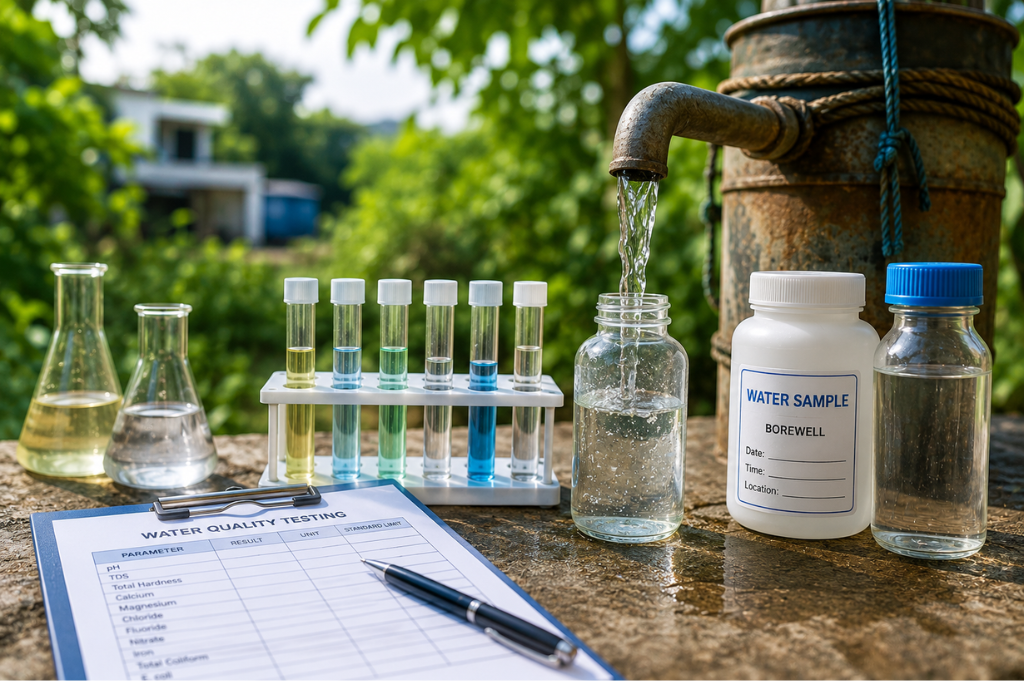
Borewell water is widely used in homes, apartments, industries, schools, hospitals, and commercial buildings. While it may appear clean, it can contain harmful contaminants like bacteria, heavy metals, excess fluoride, or nitrates that are invisible to the naked eye.
Booking a borewell water testing laboratory is the best way to ensure your water is safe for drinking or daily use. In this guide, you’ll learn the simple process of booking a test, what to expect in a borewell water test report, and why professional testing is important.
What Is Borewell Water Testing?
Borewell water testing is a laboratory analysis that checks the physical, chemical, and microbiological quality of groundwater. The test helps determine whether the water is safe for drinking, domestic, industrial, or commercial use.
Common parameters tested include:
- pH
- Total Dissolved Solids (TDS)
- Hardness
- Iron
- Fluoride
- Nitrate
- Heavy Metals
- Total Coliform
- E. coli
The results are compared with borewell water quality standards to assess water safety.
Why Is Borewell Water Testing Important?
Regular water testing helps you:
- Identify harmful contaminants.
- Ensure safe drinking water.
- Protect your family or employees from waterborne diseases.
- Meet water quality requirements for industries and businesses.
- Detects changes in groundwater quality over time.
A professional borewell water test report provides accurate information so you can take corrective action if needed.
How to Book a Borewell Water Testing Laboratory
Booking a water test is quick and straightforward.
Step 1: Choose a Reliable Laboratory
Select a laboratory with experienced professionals, modern testing facilities, and recognized quality practices such as NABL accredited water testing.
Step 2: Share Your Requirement
Inform the laboratory about how the water is used for drinking, residential use, industrial processes, food manufacturing, or commercial purposes. This helps determine the appropriate testing parameters.
Step 3: Collect the Water Sample
Use a clean container and follow the laboratory’s sample collection instructions. Proper sampling ensures accurate test results.
Step 4: Laboratory Analysis
The laboratory performs physical, chemical, and microbiological testing using standardized methods to evaluate water quality.
Step 5: Receive Your Test Report
Once testing is complete, you’ll receive a detailed borewell water test report showing the tested parameters, results, and recommendations if treatment is required.
What Does a Borewell Water Test Report Include?
A typical report contains:
Parameter | Purpose |
pH | Water acidity or alkalinity |
TDS | Mineral content |
Hardness | Calcium and magnesium levels |
Iron | Excess iron detection |
Fluoride | Safe fluoride levels |
Nitrate | Groundwater contamination |
Heavy Metals | Toxic metal analysis |
Coliform & E. coli | Microbiological safety |
The report helps determine whether the water is suitable for its intended use.
How Often Should Borewell Water Be Tested?
Experts recommend testing borewell water:
- At least once a year.
- Before using a newly drilled borewell.
- After floods or heavy rainfall.
- If the water changes in taste, smell, or colour.
- Before installing a new water treatment system.
Regular testing helps maintain safe and consistent water quality.
Why Choose Analytical Technology Laboratory?
Analytical Technology Laboratory provides professional borewell water testing services for:
- Homes
- Apartments
- Industries
- Schools
- Hospitals
- Commercial buildings
- Real estate projects
Our experienced team performs detailed water quality analysis and provides easy-to-understand reports to help you make informed decisions about your water.
📞 Call ATL Labs: +91 95008 95001
Book your borewell water testing today and get accurate results from our experienced laboratory professionals.
