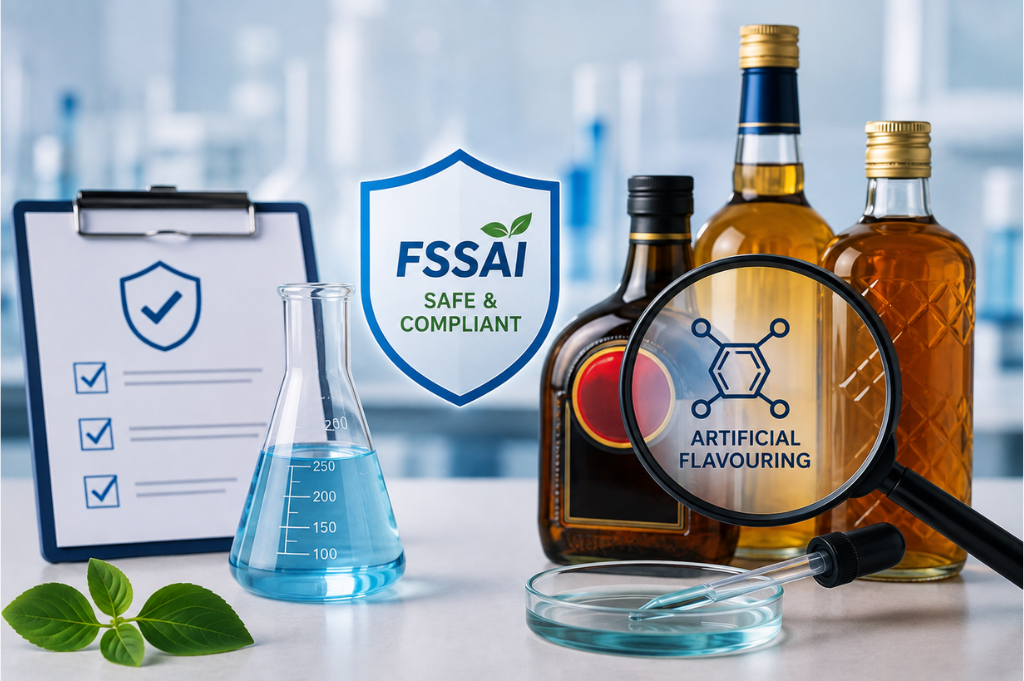
The Food Safety and Standards Authority of India (FSSAI) recently took regulatory action concerning certain alcoholic beverage variants over the alleged use of artificial flavouring that did not comply with applicable standards.
Although the enforcement specifically involves alcoholic beverages, the implications extend across the entire food and beverage industry. Manufacturers today face increasing scrutiny over ingredients, product formulations, labeling, and regulatory compliance.
This development highlights the importance of scientific testing, transparent labeling, and quality assurance throughout the manufacturing process.
Source URL: FSSAI bars sale of Old Monk variant, Bagpiper, Royal Challenge over artificial flavouring
What Was the Issue?
According to recent reports, FSSAI directed action after identifying concerns regarding the use of artificial flavouring in specific alcoholic beverage variants.
The regulator emphasized that manufacturers must comply with the Food Safety and Standards (Alcoholic Beverages) Regulations and ensure that ingredients and flavouring agents meet prescribed standards.
The action demonstrates FSSAI’s commitment to:
- Consumer safety
- Product authenticity
- Accurate ingredient declarations
- Regulatory compliance
- Transparent labeling
Why Is Artificial Flavouring a Regulatory Concern?
Artificial flavouring is not inherently unsafe when used according to approved regulations. However, regulatory issues can arise when:
- Non-permitted flavouring substances are used.
- Ingredients are not declared correctly.
- Product labels are misleading.
- Formulations do not comply with FSSAI standards.
- Manufacturers fail to follow prescribed manufacturing practices.
Regulatory authorities evaluate whether products accurately represent their composition and comply with applicable food safety standards.
Problems Food & Beverage Manufacturers May Face
If products do not meet regulatory requirements, businesses may encounter several challenges.
1. Regulatory Notices
FSSAI may issue notices requiring manufacturers to explain non-compliance or take corrective action.
2. Product Withdrawal
Products that fail to comply with regulations may need to be withdrawn from the market until compliance issues are resolved.
3. Damage to Brand Reputation
Consumer trust can be significantly affected when regulatory actions become public.
4. Financial Losses
Product recalls, relabeling, inventory replacement, and legal expenses can increase operational costs.
5. Supply Chain Disruptions
Distributors and retailers may temporarily suspend sales until regulatory concerns are addressed.
Root Causes Behind Compliance Issues
Many regulatory actions result from preventable quality management gaps rather than intentional violations.
Common causes include:
- Inadequate raw material verification
- Poor supplier qualification
- Lack of ingredient testing
- Insufficient formulation validation
- Incorrect labeling
- Outdated regulatory knowledge
- Limited internal quality audits
- Absence of routine laboratory testing
How Laboratory Testing Helps Prevent These Problems
Independent laboratory testing is one of the most effective ways to reduce compliance risks before products reach consumers.
Food and beverage testing can help verify:
- Ingredient composition
- Product formulation
- Artificial and natural flavour profiles
- Chemical parameters
- Contaminants
- Heavy metals
- Microbiological safety
- Product consistency
- Regulatory compliance
Testing provides scientific evidence that supports product quality and labeling claims.
Why NABL-Accredited Testing Is Important
A NABL-accredited laboratory follows internationally recognized testing standards and quality management systems.
Benefits include:
- Accurate analytical results
- Reliable testing methods
- Regulatory confidence
- Improved product quality
- Better export readiness
- Reduced compliance risks
How ATL Labs Supports Manufacturers
ATL Labs provides comprehensive laboratory testing solutions for food and beverage manufacturers to support quality assurance and regulatory compliance.
Our services include:
- Food Chemical Analysis
- Beverage Testing
- Microbiological Testing
- Nutritional Analysis
- Heavy Metal Analysis
- Pesticide Residue Testing
- Shelf-Life Studies
- Food Adulteration Testing
- Water Testing
- Regulatory Support Testing
Our NABL-accredited laboratory helps businesses identify potential quality issues early, maintain compliance with FSSAI regulations, and strengthen consumer confidence.
Best Practices for Manufacturers
To reduce regulatory risks, food and beverage businesses should:
- Verify all raw materials before production.
- Conduct routine laboratory testing.
- Validate product formulations.
- Review labels periodically.
- Keep documentation up to date.
- Monitor changes in FSSAI regulations.
- Perform regular internal audits.
- Partner with NABL-accredited laboratories.
Conclusion
The recent FSSAI action serves as an important reminder that regulatory compliance extends beyond manufacturing; it includes ingredient selection, formulation, labeling, documentation, and scientific validation.
For food and beverage manufacturers, investing in regular laboratory testing and quality assurance is essential for protecting consumers, maintaining compliance, and safeguarding brand reputation.
By partnering with a trusted NABL-accredited laboratory like ATL Labs, businesses can confidently meet regulatory requirements while delivering safe, high-quality products to the market.
Ensure Your Products Meet FSSAI Standards with ATL Labs
Whether you manufacture beverages, packaged foods, dairy products, spices, edible oils, or nutritional products, ATL Labs offers accurate, NABL-accredited testing services to help you verify product quality, support regulatory compliance, and build consumer trust.
Contact ATL Labs today to learn how our food and beverage testing solutions can support your business.
Disclaimer:
This content is based on publicly available news reports and is for informational purposes only. Analytical Technology Laboratory has not independently verified the reported incident.
